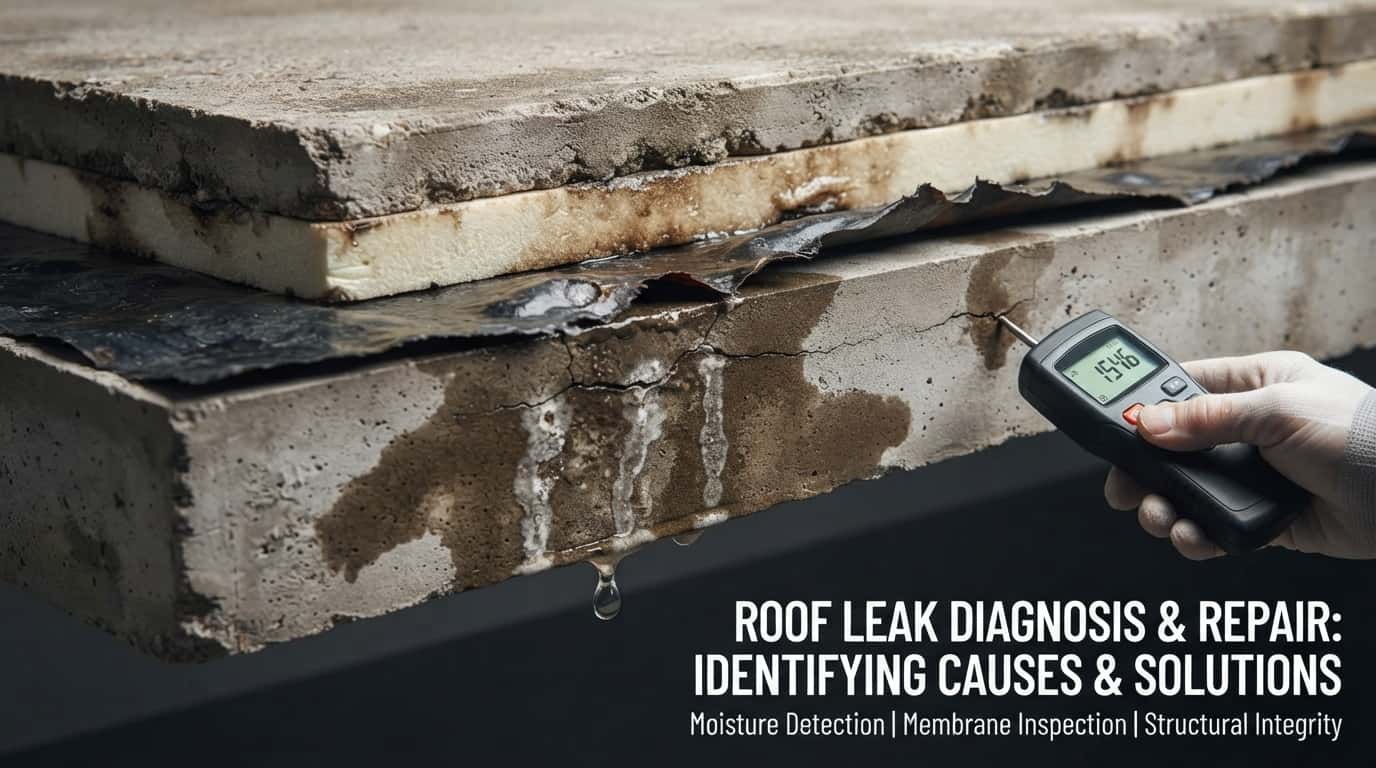
A water stain on the ceiling, a damp corner, a drip that only shows up during heavy rain, roof leaks in Pakistan follow predictable patterns, and fixing them properly starts with understanding why they're happening, not just patching where the water is currently visible. Here's how to actually diagnose the cause before choosing a repair.
Need the chemical/membrane options for your fix? See our Waterproofing Services guide.
Why Pakistani Roofs Leak, The Real Causes
Thermal expansion cracks. This is a genuinely Pakistan-specific cause worth understanding: extreme heat (up to 50°C on exposed concrete) causes the roof slab to expand, and when rain suddenly cools it down, this rapid temperature swing creates hairline cracks, invisible in dry conditions but wide enough to let water through once monsoon rain arrives. This cycle repeats every year, meaning even a well-sealed roof can develop new micro-cracks over successive hot summers.
Water ponding from poor slope. Flat or poorly sloped roofs allow rainwater to collect rather than drain away, standing water finds even the smallest gaps to seep through over time, and the longer water sits in one area, the more likely it finds a weak point.
Pipe and vent penetrations. Gaps around water tank pipes, vent pipes, and any roof penetration are consistently among the most common leak sources, the seal around these penetrations degrades over time, and rain finds this weak point readily once the seal fails.
Wall and parapet joints. Where the roof meets a wall or parapet, joint sealing can fail with age, creating another common entry point that's easy to overlook since the leak inside the house may appear some distance from the actual entry point on the roof.
Old, failed waterproofing layers. Bitumen or older waterproofing systems degrade over years of heat and UV exposure, a roof that was properly waterproofed a decade ago may now have failed coating that needs renewal, not just spot repair.
The Diagnostic Approach, Find the Real Source First
A critical warning: temporary fixes, silicone dabbed on a visible crack, a tarp thrown over a problem area, a quick local re-coat, commonly fail within one monsoon season, because water frequently travels horizontally under the roof surface before dripping down at a point some distance from where it actually entered. Patching where you see the drip inside your house often misses the actual entry point on the roof.
Proper diagnosis involves:
- Tracing the water path, the interior drip location is a clue, not necessarily the exact leak point; water often travels along the underside of the roof slab before finding a path down
- Checking drains and drainage flow, blocked or poorly designed drainage is a common root cause behind what looks like a simple crack problem
- Inspecting the parapet and all pipe penetrations specifically, these are disproportionately likely to be the actual source, even when the visible damage is elsewhere
- A flood test where appropriate, deliberately flooding a section of roof with water (in controlled, dry-weather conditions) and observing where it appears inside can definitively identify the actual leak path, rather than guessing based on where damage is visible
Temporary Fix vs. Permanent Solution
Temporary/quick fixes (sealant over a visible crack, patch repair) can buy time before a proper fix, but genuinely don't address root causes like thermal cracking cycles, drainage problems, or degraded penetration seals, expect these to need repeating, often within the same or following monsoon season.
Permanent solutions require actually addressing the diagnosed cause: proper crack repair with flexible, movement-tolerant sealants (since the roof will keep expanding and contracting seasonally, a rigid patch will crack again), drainage correction where ponding is the root issue, and a genuine waterproofing membrane or coating system applied across the full vulnerable area rather than spot-patched at just the visible symptom.
Why flexibility matters specifically for Pakistan's climate: given the genuine thermal cycling described above, a waterproofing system that can't move with the roof's natural expansion and contraction will simply crack again at the same or a nearby point, this is why flexible/elastomeric coating systems, covered in our Waterproofing guide, consistently outperform rigid patch repairs for Pakistani roofs specifically.
Have questions about this?
Chat with us on WhatsApp. We usually reply within minutes.
When Is the Best Time to Fix a Roof Leak?
The ideal timing is before monsoon arrives, ideally during summer months, this gives waterproofing systems time to cure properly in dry conditions, and addresses the problem before the actual rain season tests it. Waiting until you're already experiencing active leaks during monsoon rain makes proper diagnosis and application genuinely harder, since wet conditions complicate both crack-tracing and material application.
Signs You Should Look For Before Waiting for a Visible Leak
Dark wall marks, damp patches on paint, or a musty/mold smell are all early warning signs of roof seepage that hasn't yet become an obvious visible drip, catching these signs before the monsoon season fully arrives allows for proper diagnosis and repair timing rather than an emergency fix during active rainfall.
Related Guides
- Waterproofing Services, Chemical & Membrane Guide
- Roof Heat Proofing, Combined System Guide
- Chemical Coating vs Physical Insulation
Frequently Asked Questions
Q1: What is the best solution for roof leakage in Pakistan? The best solution depends on the diagnosed cause, but generally involves properly diagnosing the actual leak source (not just patching visible symptoms), then applying a flexible/elastomeric waterproofing system that can tolerate Pakistan's significant thermal expansion and contraction cycles. Permanent fixes address root causes like drainage problems or degraded pipe-penetration seals, not just visible cracks. (Ahrefs SV: 200/mo, "roof leakage solution")
Q2: Why does my roof only leak in certain spots after heavy rain? Water frequently travels horizontally under the roof surface before dripping down at a point some distance from where it actually entered, meaning the interior drip location is often not the same as the actual leak entry point. Common actual entry points include pipe/vent penetrations, parapet joints, and hairline cracks from thermal expansion, even when the visible interior damage appears elsewhere.
Q3: Why do roof cracks appear even on a roof that seemed fine before? Pakistan's extreme heat causes roof slabs to expand significantly, and when rain suddenly cools the surface, this rapid temperature swing creates hairline cracks, invisible in dry conditions but wide enough to let water through once rain arrives. This thermal cycling repeats annually, meaning new micro-cracks can develop even on a previously sound roof after successive hot summers.
Q4: Why do temporary roof leak fixes like sealant or tarps usually fail? Because they typically address only the visible symptom (where water is dripping inside) rather than the actual entry point on the roof, which is often located elsewhere due to water traveling horizontally under the surface before dripping down. These temporary fixes commonly fail within one monsoon season for this reason.
Q5: What is a flood test, and when is it used for roof leak diagnosis? A flood test involves deliberately flooding a section of roof with water under controlled, dry-weather conditions and observing where it appears inside the building, this definitively identifies the actual leak path rather than guessing based on where interior damage is visible, particularly useful for persistent leaks that resist standard patch repairs.
Q6: When is the best time to fix roof leakage in Pakistan? Before monsoon arrives, ideally during summer months, this allows waterproofing materials to cure properly in dry conditions and addresses the problem before actual rainfall tests it. Waiting until active leaks occur during monsoon makes both diagnosis and proper material application genuinely more difficult due to wet conditions.
Q7: What early warning signs should I watch for before an obvious roof leak appears? Dark wall marks, damp patches on paint, or a musty/mold smell are early indicators of roof seepage that hasn't yet become an obvious visible drip. Catching these signs before monsoon season fully arrives allows time for proper diagnosis and repair, rather than facing an emergency fix during active rainfall.
Have questions about this?
Chat with us on WhatsApp. We usually reply within minutes.