If you're trying to reduce a genuinely painful summer AC bill in Pakistan, you've probably come across two competing recommendations: reflective roof cooling paint, or thermocol/PU foam insulation. Both work, but they work through different mechanisms, and the honest answer to "which cuts your bill more" depends on your specific roof and budget, not a universal winner.
How Each Approach Actually Reduces Heat
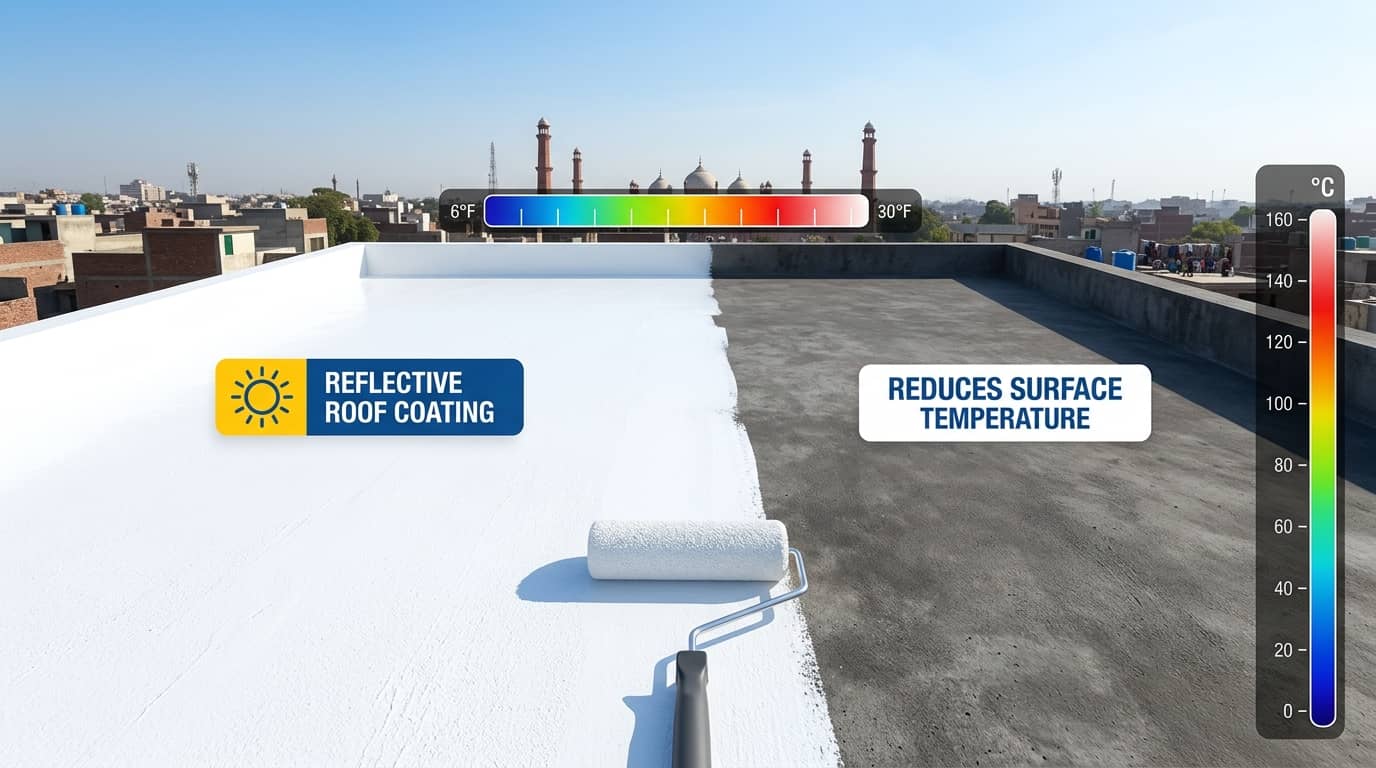
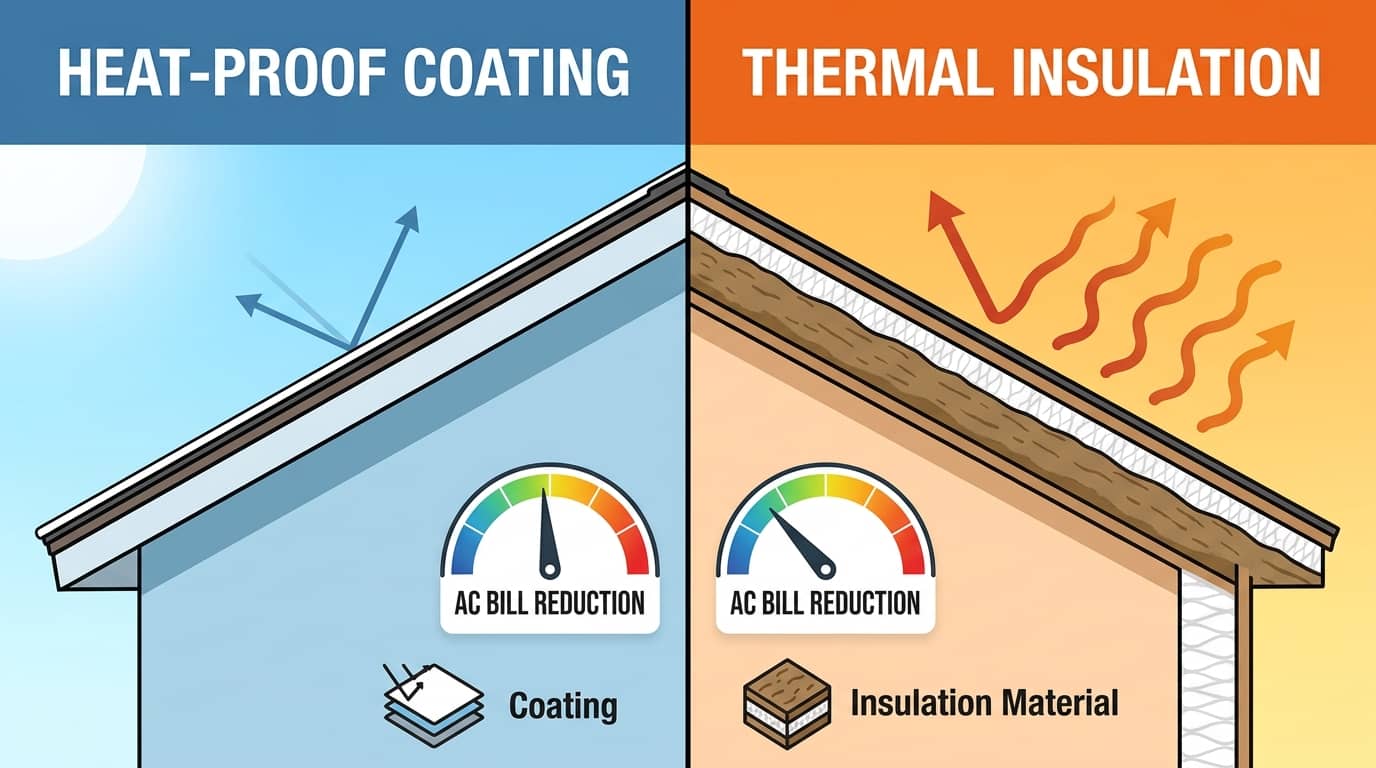
Chemical coating works by reflecting sunlight away from the roof surface before it's absorbed, reducing surface temperature and, as a result, how much heat conducts downward into your rooms. It addresses the problem at the point of contact between sun and roof.
Physical insulation (thermocol sheet or PU foam spray) works by blocking heat conduction through the roof material itself, using trapped air pockets that heat struggles to pass through. It addresses the problem after the roof surface has already absorbed some heat, preventing that heat from reaching the interior.
The key distinction: coating reduces how much heat gets absorbed in the first place; insulation blocks the heat that does get absorbed from reaching you. These are genuinely complementary mechanisms, not competing ones, which is why combining them typically outperforms either alone.
Real-World Performance Comparison
| Factor | Chemical Coating | Physical Insulation (Thermocol) |
|---|---|---|
| Surface temperature reduction | 30-40% claimed by most manufacturers | Doesn't directly reduce surface temp, blocks its transfer |
| Interior temperature impact | Meaningful, often 5-10% reduction | Often larger, several degrees Celsius reduction |
| Upfront cost | Lower (PKR 3,800-21,000 depending on area/product) | Moderate (PKR 22-75/sq ft depending on thickness) |
| Waterproofing benefit | Often included (elastomeric coatings) | Not inherent, needs separate waterproofing layer |
| Reapplication needed | Yes, periodically as UV degrades reflectivity | No, physical barrier doesn't degrade the same way |
| Best for | Budget-first projects, added waterproofing need | Larger heat reduction priority, longer-term investment |
Which Genuinely Cuts the AC Bill More?
Based on the mechanisms involved, physical insulation generally delivers a larger absolute reduction in interior temperature and corresponding AC load, because it addresses heat transfer directly rather than just reducing initial absorption. A well-installed 2-inch thermocol layer creates a more complete thermal barrier than reflective coating alone can achieve.
However, this comes with a real caveat: coating is significantly cheaper upfront and easier to apply, meaning for a given budget, you might afford full-roof coating coverage versus only partial-roof thermocol coverage, and full coverage of a less-effective method can sometimes outperform partial coverage of a more-effective one, simply due to area covered.
The Combined Approach, Why It Usually Wins
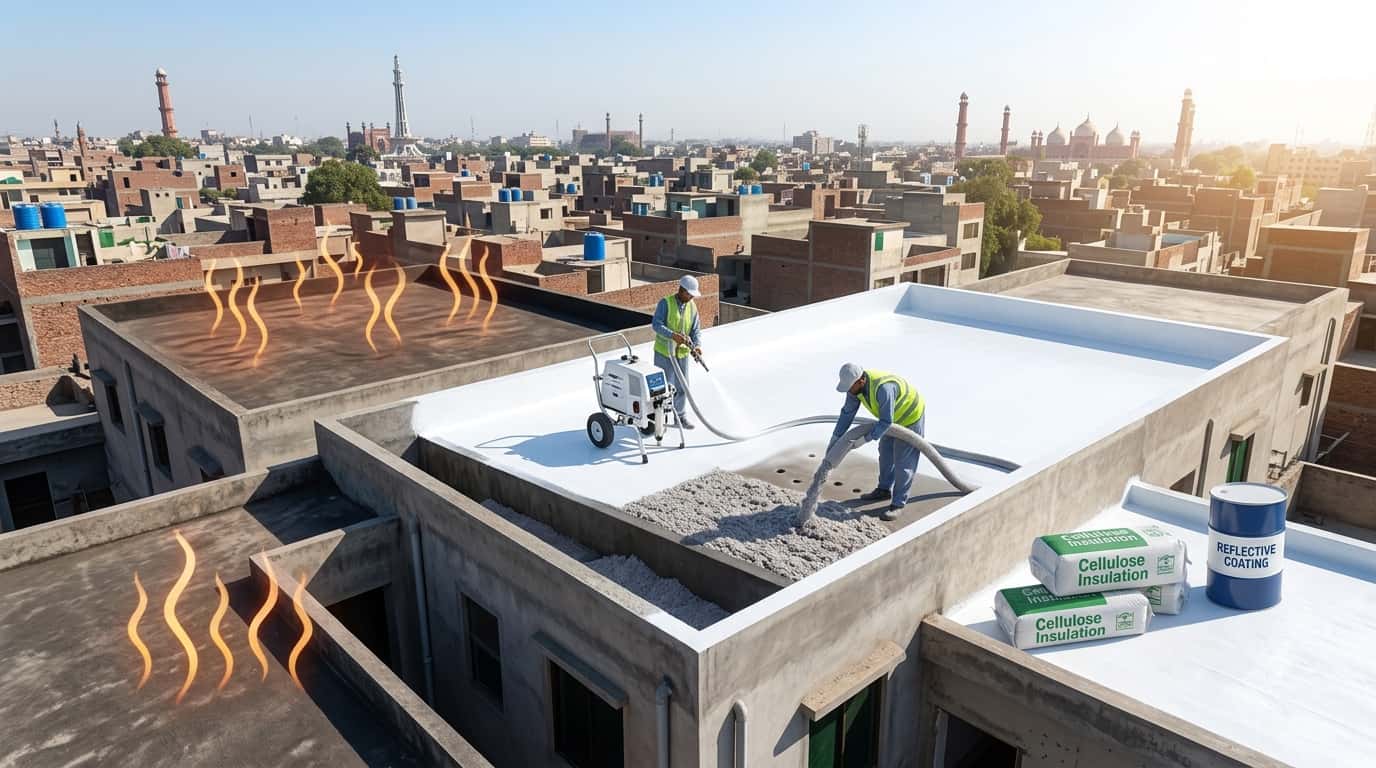
For most Pakistani homeowners with a genuine AC bill problem, combining both approaches delivers the best real-world result: thermocol sheet blocks conductive heat transfer through the roof mass, while reflective coating on top further reduces how much heat the roof surface absorbs before it even reaches the thermocol layer. This two-stage approach consistently outperforms either method alone, addressing the heat problem from both angles simultaneously.
See our full Roof Heat Proofing guide for pricing on this combined system approach.
Budget-Based Decision Guide
If your budget is genuinely tight: start with reflective coating on the full roof area, it's the more affordable per-square-foot option and delivers meaningful improvement, plus waterproofing benefit if you choose an elastomeric product.
If you can afford a moderate investment: thermocol sheet on the most heat-affected rooms (typically top-floor rooms directly under the roof) delivers a larger localized improvement than spreading a thinner budget across coating for the whole house.
Have questions about this?
Chat with us on WhatsApp. We usually reply within minutes.
If budget allows the complete approach: combine both, thermocol for physical insulation, reflective coating on top for additional surface-level reduction and integrated waterproofing.
What Neither Approach Fixes Alone
Both coating and thermocol address roof heat specifically, neither solves heat entering through windows, walls, or from appliances and people inside the home. If your AC bill problem is genuinely severe despite good roof treatment, the remaining heat sources are worth investigating separately (window shading, wall insulation, appliance efficiency) rather than assuming more roof treatment will keep delivering proportional improvement.
Related Guides
- Roof Heat Proofing, Combined System Guide
- Thermocol/EPS Sheet, Full Pricing Guide
- Roof Cooling Paint in Pakistan
- Does Thermocol Sheet Actually Reduce Heat?
Frequently Asked Questions
Q1: Does reflective coating or thermocol sheet cut the AC bill more? Physical insulation (thermocol sheet) generally delivers a larger absolute reduction in interior temperature and AC load, since it blocks heat conduction directly rather than just reducing initial surface absorption. However, coating is significantly cheaper per square foot, so full-roof coating coverage on a limited budget can sometimes outperform partial-roof thermocol coverage simply due to area covered.
Q2: Should I choose one method, or use both together? Combining both typically delivers the best result, thermocol blocks heat conduction through the roof mass while reflective coating reduces how much heat the surface absorbs in the first place, addressing the problem from two complementary angles rather than competing approaches. See our Roof Heat Proofing guide for combined-system pricing.
Q3: What's the actual difference in how coating and insulation work? Coating reflects sunlight away from the roof surface before it's absorbed, reducing surface temperature. Insulation blocks heat conduction through the roof material after some heat has already been absorbed, using trapped air pockets that resist heat transfer. Coating acts at the point of sun contact; insulation acts at the point of heat transfer into your home.
Q4: If I can only afford one option right now, which should I choose? If budget is genuinely tight, full-roof reflective coating is the more affordable per-square-foot option and delivers meaningful, whole-roof improvement plus waterproofing benefit with elastomeric products. If you can afford a moderate investment, thermocol sheet on the most heat-affected rooms (typically directly under the roof on the top floor) often delivers larger localized improvement than thin coating coverage.
Q5: Does chemical coating need to be reapplied over time? Yes, generally, reflective properties degrade with UV exposure and weathering, meaning periodic reapplication is typically needed to maintain performance. Physical insulation like thermocol sheet doesn't degrade the same way, since it's a physical barrier rather than a surface-reflectivity property that fades with sun exposure.
Q6: Will roof coating or insulation fix my AC bill problem completely? Not necessarily on their own, both address roof heat specifically, but heat also enters through windows, walls, and from appliances and occupants inside the home. If your AC bill remains high despite good roof treatment, these other heat sources are worth investigating separately rather than assuming additional roof treatment will keep delivering proportional improvement.
Q7: Is chemical coating a substitute for waterproofing, or do I still need separate waterproofing? Many chemical coating products include elastomeric properties that provide genuine waterproofing benefit alongside heat reflection, potentially reducing or eliminating the need for separate waterproofing. However, confirm this specifically with your chosen product, not all coatings include this dual function, and severe existing leaks may still need dedicated waterproofing treatment regardless.
Have questions about this?
Chat with us on WhatsApp. We usually reply within minutes.