Every major Pakistani city gets hot in summer, but Lahore has a specific, measurable heat problem layered on top of the general climate, and it's one most Lahore homeowners don't realize is happening: the city is genuinely, scientifically hotter than the land around it, purely because of how it's built.
Ready to fix your roof? See our Roof Heat Proofing guide for pricing and methods.
The Real Number: Lahore's Urban Heat Island Effect
A 2026 study attributed an average 4.1°C temperature difference between Lahore and the surrounding rural area to the urban heat island effect, meaning temperatures within the city itself run measurably hotter than the same latitude and season would produce in open countryside just outside the city limits.
This isn't a small or theoretical difference. 4.1°C is the gap between a genuinely hot day and a dangerously hot one, and it's caused entirely by how Lahore has developed, not by anything unique about its underlying regional climate.
Why Lahore Specifically Has This Problem
Over the last 25 years, Lahore has experienced rapid expansion, with its population doubling and the city's built-up area increasing nearly threefold. More human activity, driving, factories, construction, combined with a much greater area of paved and concrete surfaces adds and traps heat in the local environment far more than the countryside it replaced.
The mechanism is straightforward: concrete, asphalt, and dense building material absorb and retain heat throughout the day, then release it slowly overnight, meaning Lahore's nights don't cool down as much as a less-developed area would, and the next day starts from a hotter baseline. Roofs are a major contributor to this retained heat mass precisely because they're the surface most directly and continuously exposed to the sun.
What This Means for a Lahore Roof Specifically
Given the city's dense urban environment, heavy traffic, and limited green space, conditions in Lahore often feel even hotter than the recorded temperature through this same urban heat island effect, meaning a roof in central, built-up Lahore experiences genuinely more heat stress than an identical roof in a less-developed area recording the "same" official temperature.
Real recorded extremes for context: Lahore has recorded a historic high of 49.1°C, and recent summers have seen daytime temperatures repeatedly crossing the mid-40°C range for extended periods, with perceived (feels-like) temperatures running even higher than the actual recorded temperature during peak humidity conditions.
The Practical Implication for Roof Insulation Choice
Given Lahore's specific combination of high baseline heat plus the added urban heat island effect, roof insulation here isn't solving a generic "hot country" problem, it's solving a compounded, city-specific heat load that's measurably worse than what identical insulation would need to handle in a more rural or less-developed location.
This has two practical implications:
Thicker/higher-performance insulation is worth the investment here specifically, the 2-inch thermocol standard recommendation, or the combined coating-plus-insulation approach covered in our Roof Heat Proofing guide, earns back its cost faster in Lahore's compounded heat environment than it might in a milder climate.
Overnight heat retention matters more in Lahore than elsewhere, since the city's built environment doesn't cool down as much overnight, a roof that traps daytime heat continues radiating it into your rooms for longer into the evening than the same roof would in a location with a bigger day-to-night temperature swing. Insulation that blocks this ongoing radiative heat matters more here.
Have questions about this?
Chat with us on WhatsApp. We usually reply within minutes.
Is This Getting Worse Over Time?
Yes, based on current climate projections, scientists anticipate continued temperature increases through 2026-2027, and Lahore's urban heat island effect is expected to compound with broader regional warming rather than offset it, meaning "near future" heat conditions could be more extreme than many current residents are prepared for. This is a genuine reason to treat roof heat proofing as an investment against a worsening trend, not just a response to current conditions.
Related Guides
- Roof Heat Proofing, Full Guide
- Thermocol/EPS Sheet
- Roof Cooling Paint in Pakistan
- Chemical Coating vs Physical Insulation
Frequently Asked Questions
Q1: How much hotter is Lahore than surrounding areas? A 2026 study found Lahore runs an average of 4.1°C hotter than the surrounding rural area due to the urban heat island effect, a measurable, scientifically documented difference caused by the city's dense concrete and paved surfaces retaining heat, rather than a difference in the region's underlying climate.
Q2: Why is Lahore's urban heat island effect worse than other Pakistani cities? Lahore's population has doubled and its built-up area has grown nearly threefold over the last 25 years, combined with heavy traffic and limited green space, this rapid, dense urban expansion is the primary driver of the heat island effect, since concrete and paved surfaces absorb and retain significantly more heat than natural or less-developed land.
Q3: What is the highest temperature ever recorded in Lahore? Lahore has recorded a historic high of 49.1°C. Recent summers have also seen daytime temperatures repeatedly crossing the mid-40°C range for extended periods, with perceived "feels-like" temperatures running even higher during peak humidity conditions.
Q4: Does the urban heat island effect mean Lahore roofs need thicker insulation than other cities? Given Lahore's compounded heat load, high regional baseline temperature plus an additional 4.1°C from the urban heat island effect, investing in higher-performance insulation (2-inch thermocol or a combined coating-plus-insulation system) tends to earn back its cost faster here than in less urbanized locations with lower overall heat stress.
Q5: Why does overnight heat matter for Lahore roofs specifically? Lahore's dense built environment doesn't cool down as much overnight compared to less-developed areas, since concrete and paved surfaces retain and slowly release absorbed heat. This means a poorly insulated roof continues radiating trapped daytime heat into rooms below for longer into the evening than an identical roof would in a location with a bigger day-to-night temperature swing.
Q6: Is Lahore's heat problem expected to get worse? Yes, based on current climate projections, scientists anticipate continued temperature increases through the coming years, and Lahore's urban heat island effect is expected to compound with broader regional warming rather than offset it. This makes roof heat proofing a reasonable investment against a worsening trend, not just a response to current summer conditions.
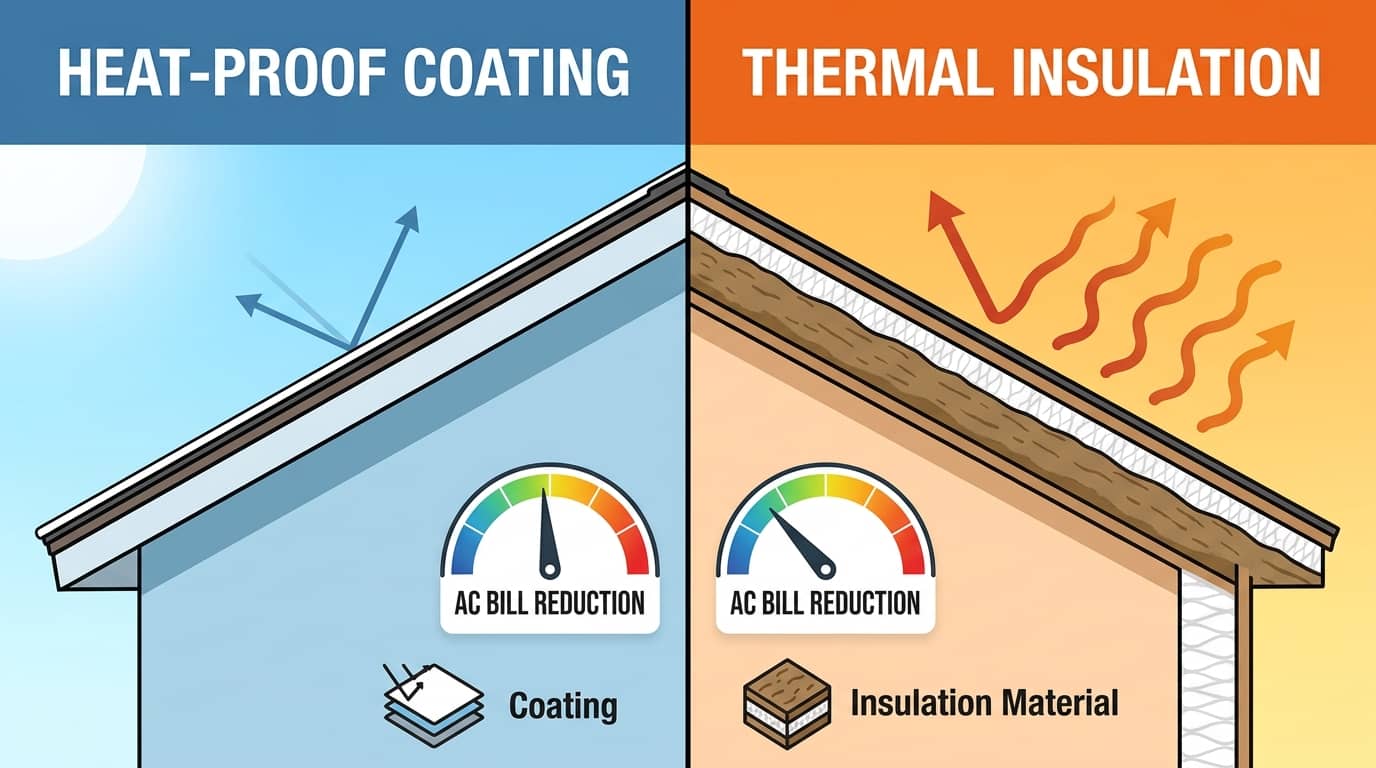
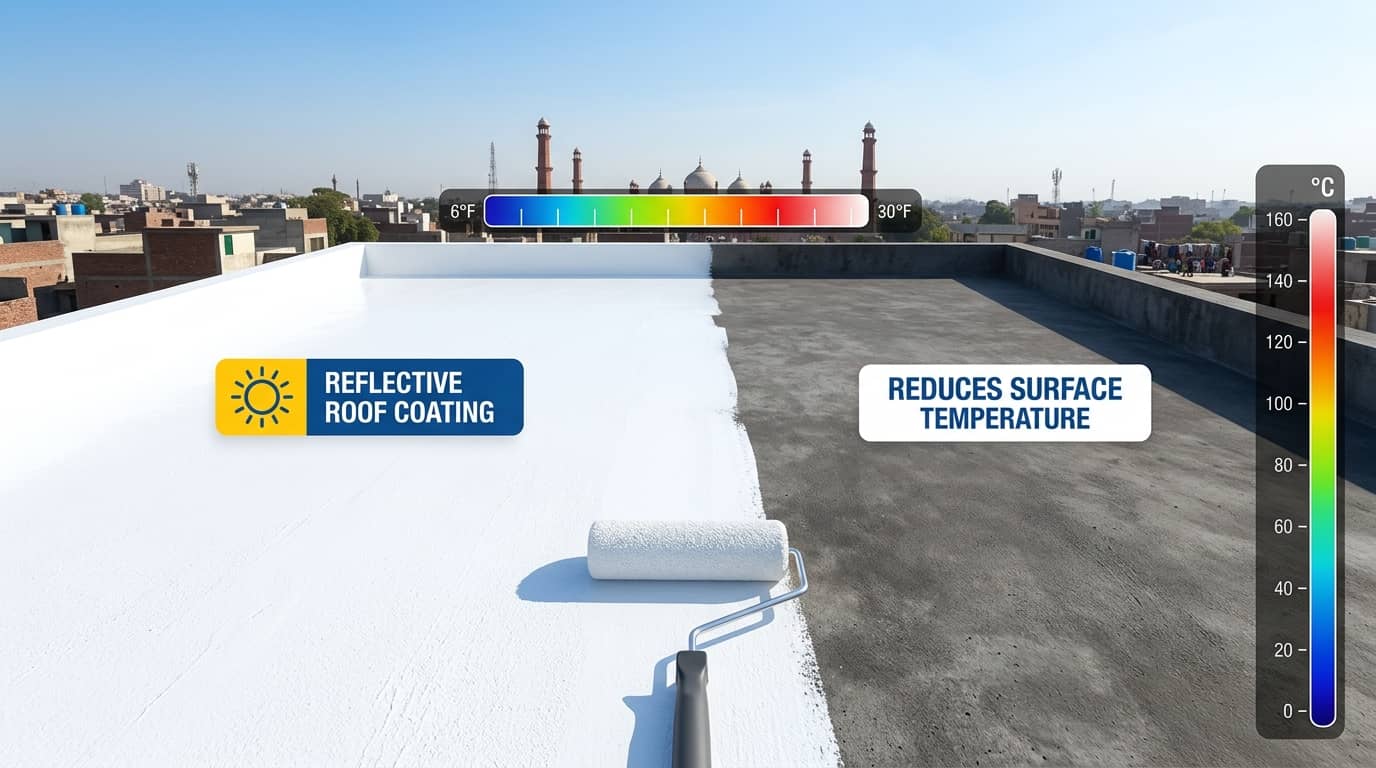
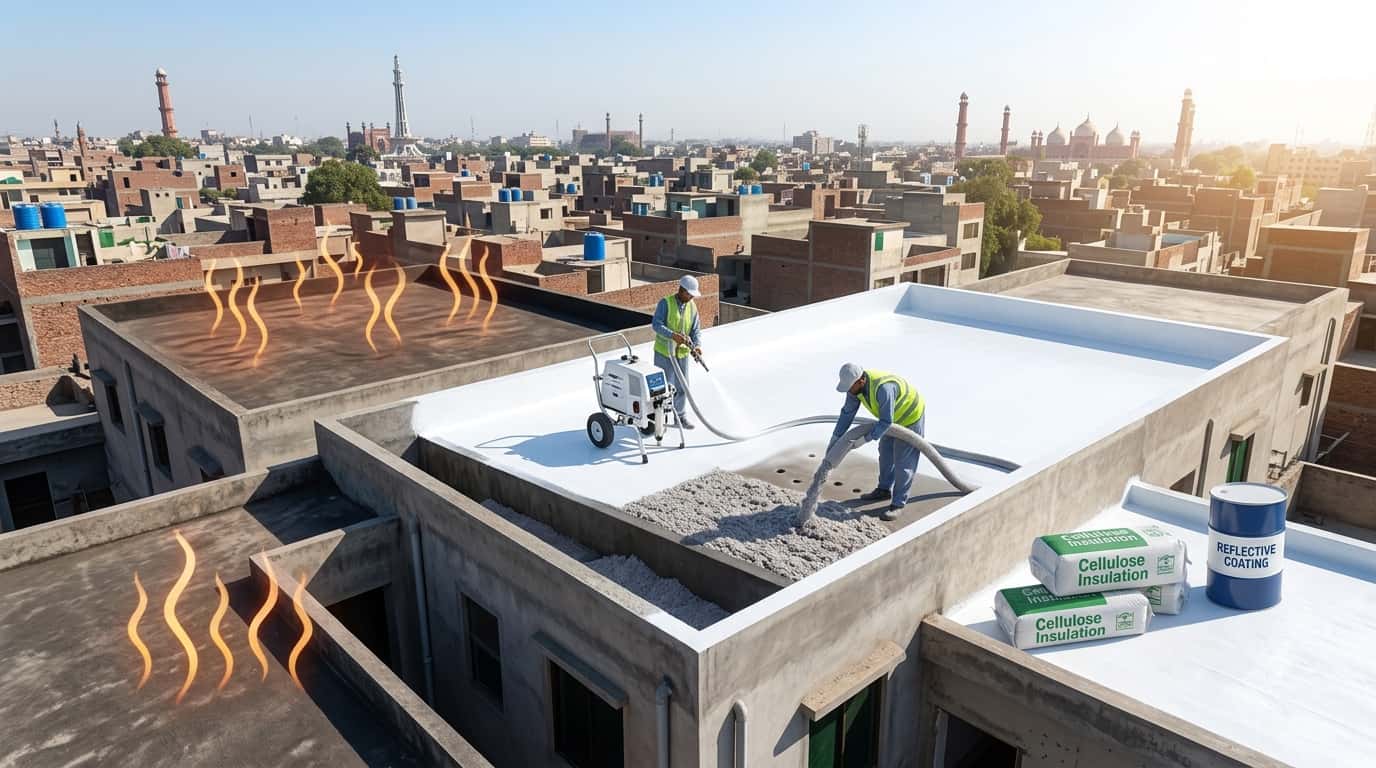
Q7: What roof heat proofing approach works best for Lahore's specific climate? A combined system pairing thermocol sheet insulation with reflective roof coating typically delivers the strongest result for Lahore's compounded heat load, coating reduces surface heat absorption while thermocol blocks conductive heat transfer through the roof mass. See our Roof Heat Proofing guide for complete pricing on this combined approach.
Have questions about this?
Chat with us on WhatsApp. We usually reply within minutes.