There's a natural skepticism around thermocol sheet that's worth addressing directly: it's light, it's cheap relative to other building materials, and it doesn't look or feel like something substantial enough to meaningfully change how hot your house gets. The skepticism is understandable, but the physics behind why it works is genuinely straightforward, and the answer is yes, it does reduce heat, for specific, explainable reasons.
What's Actually Happening: Trapped Air, Not the Foam Itself
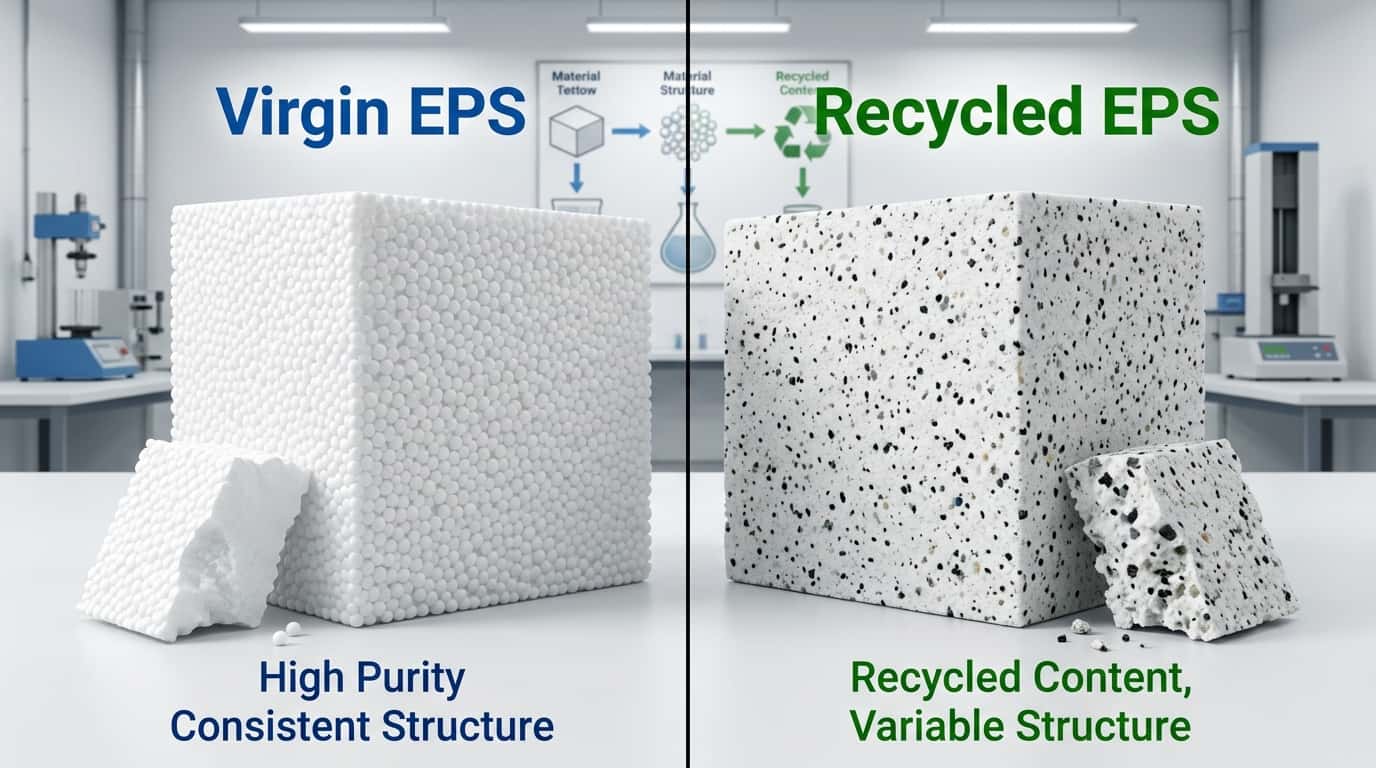
The secret to thermocol's insulating property isn't the plastic material itself, it's what's inside it. Thermocol (expanded polystyrene, EPS) is manufactured by expanding small polystyrene beads with heat and steam until they fuse together, trapping millions of tiny pockets of air within the resulting structure. By volume, a thermocol sheet is roughly 95-98% trapped air and only a small percentage actual plastic.
Why this matters for heat: air is a poor conductor of heat, heat moves through solid, dense materials (like concrete or metal) far more easily than through air. By trapping vast numbers of tiny air pockets within a rigid structure, thermocol effectively creates a barrier that heat struggles to pass through, precisely because it has to navigate around millions of air-filled gaps rather than traveling through one continuous solid material.
This is the same basic principle behind why a down jacket keeps you warm despite being lightweight, trapped air pockets, not material density, do the insulating work.
How This Applies to a Pakistani Roof Specifically
A bare RCC concrete roof absorbs heat directly from the sun throughout the day, concrete is dense and conducts heat readily, meaning the roof surface heats up, and that heat then conducts downward through the slab into your rooms below, continuing to radiate heat into the house for hours after sunset as the concrete slowly releases the heat it absorbed during the day.
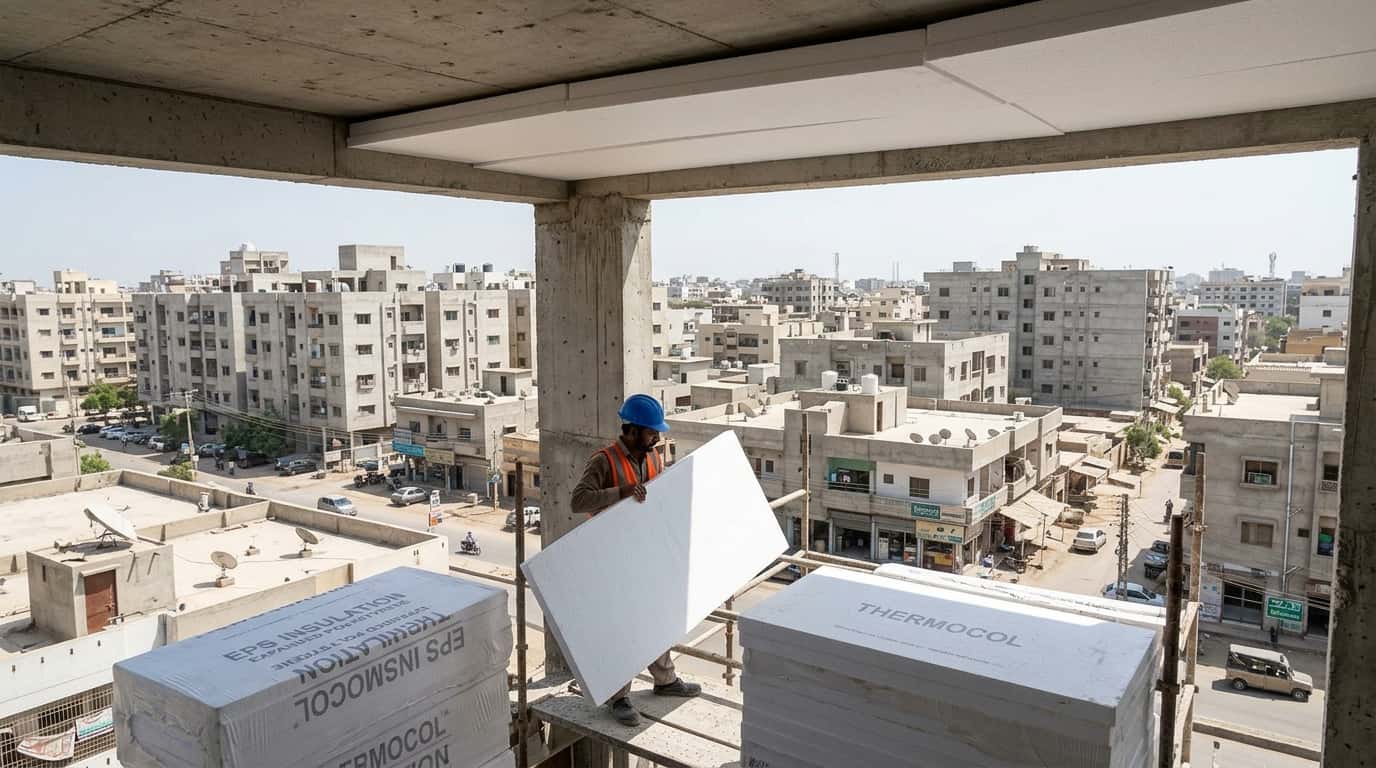
Placing thermocol sheet on or under that roof interrupts this heat conduction pathway. The sun still heats the roof's outer surface, but the thermocol layer's trapped-air structure significantly slows how much of that heat actually conducts through to the interior, this is why thermocol-insulated rooms measurably stay cooler than uninsulated ones, and stay cooler for longer into the evening.
Why Thickness Genuinely Matters
Since the insulating mechanism depends on how much trapped-air structure the heat has to pass through, thicker thermocol sheet provides meaningfully better insulation than thinner sheet, a 2-inch sheet doesn't just look more substantial than a 1-inch sheet, it genuinely makes heat travel through roughly twice the trapped-air barrier to reach the other side. This is why 2-inch is the standard recommendation for roof application in Pakistan rather than the thinner, cheaper 1-inch grade, the physics genuinely supports the thicker option for this specific application.
Why Density Also Matters, Separately from Thickness
Higher-density thermocol (measured in kg per cubic meter) packs the trapped air pockets more tightly and uniformly than lower-density foam, generally providing somewhat better insulation performance and structural durability at the same thickness. This is a separate specification from thickness, a thick but low-density sheet and a thinner but high-density sheet can have meaningfully different real-world performance despite looking similar.
What Thermocol Doesn't Do (Being Honest About Limits)
Thermocol reduces conductive heat transfer through the roof, it does not eliminate heat entirely, and it doesn't address every heat-related problem in a home. Radiant heat gain through windows, heat generated by appliances inside the home, and heat entering through uninsulated walls are separate problems that thermocol roof installation alone doesn't solve. For a more complete heat-reduction approach, thermocol is often combined with reflective roof coating (which addresses surface heat absorption), see our Roof Heat Proofing guide for the combined-system approach.
Have questions about this?
Chat with us on WhatsApp. We usually reply within minutes.
The Real-World Result
Properly installed thermocol roof insulation typically reduces indoor temperature by several degrees Celsius during peak summer conditions and correspondingly reduces the AC electricity load needed to reach a comfortable temperature, the physics described above translates into a genuine, measurable, everyday difference, not just a theoretical benefit.
Related Guides
- Thermocol/EPS Sheet, Full Pricing Guide
- Roof Heat Proofing, Combined Systems
- How to Install Thermocol Sheet
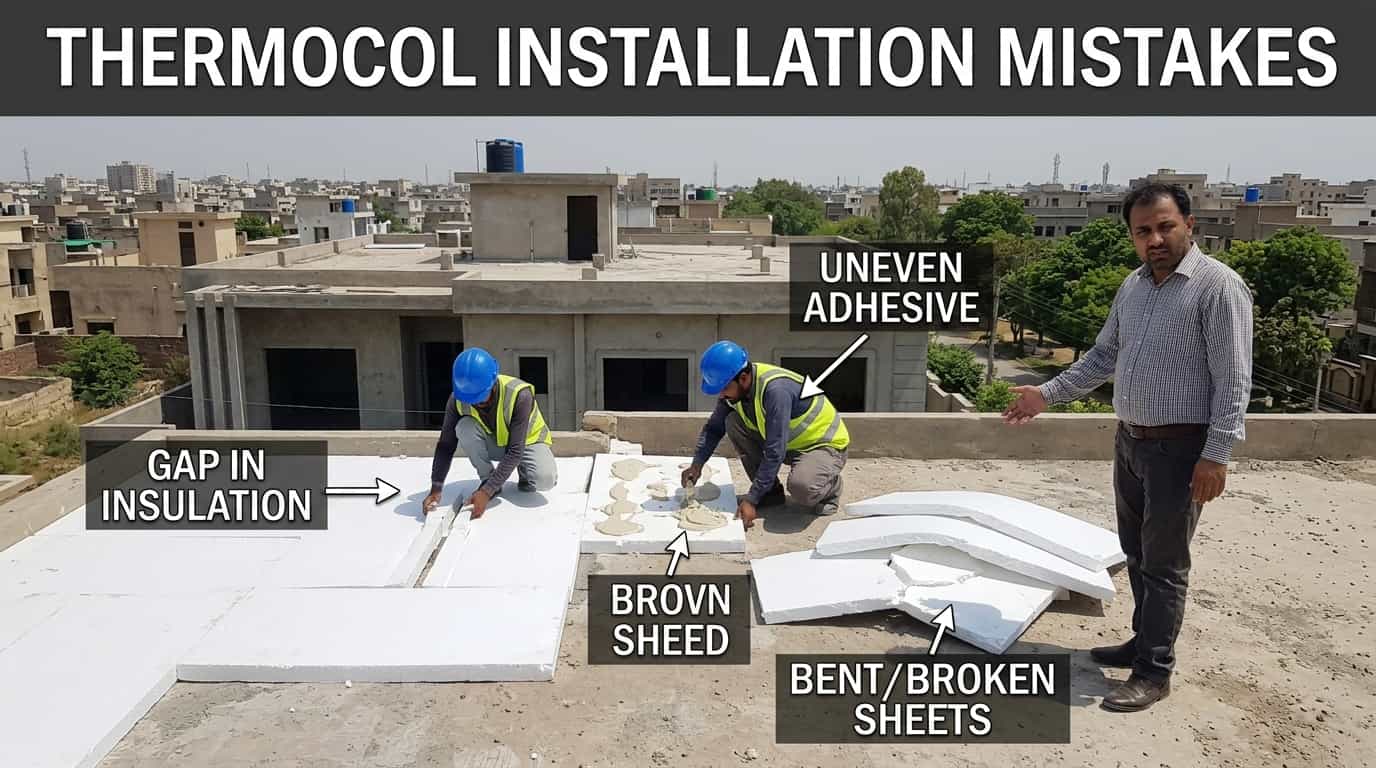
- 4 Thermocol Installation Mistakes
Frequently Asked Questions
Q1: Does thermocol sheet actually reduce heat, or is it just marketing? Yes, genuinely, thermocol's insulating property comes from trapped air pockets within its structure (roughly 95-98% air by volume), and air is a poor conductor of heat compared to dense materials like concrete. This trapped-air structure creates a real barrier that slows heat conduction through a roof, translating into measurably cooler indoor temperatures during peak summer conditions.
Q2: Why does thicker thermocol sheet insulate better? Because the insulating mechanism depends on trapped air volume, thicker sheet means heat has to travel through more trapped-air structure to pass through, genuinely slowing conduction more than thinner sheet. This is why 2-inch thermocol is the standard recommendation for roof application in Pakistan rather than the cheaper 1-inch grade.
Q3: Is higher-density thermocol actually better, or is it just more expensive? Higher-density thermocol packs trapped air pockets more tightly and uniformly, generally providing somewhat better insulation performance and structural durability at the same thickness compared to lower-density foam. This is a genuine performance difference, not just a price marker, density and thickness are separate specifications that both affect real-world performance.
Q4: Does thermocol stop all heat from entering a house? No, thermocol reduces conductive heat transfer specifically through the roof surface it's installed on, but doesn't address radiant heat through windows, appliance-generated heat inside the home, or heat entering through uninsulated walls. For a more complete approach, thermocol is often combined with reflective roof coating as part of a broader heat-reduction system.
Q5: How much cooler does a room actually get with thermocol insulation? Properly installed thermocol roof insulation typically reduces indoor temperature by several degrees Celsius during peak summer conditions, which correspondingly reduces the AC electricity load needed to reach a comfortable temperature. The exact reduction varies by thickness, density, installation quality, and the specific roof and room being insulated.
Q6: Why does a down jacket comparison make sense for explaining thermocol? Both work through the same basic physics principle, trapped air pockets, not material density or weight, do the actual insulating work. A down jacket is lightweight but warm because feathers trap air effectively; thermocol is lightweight but insulating for the same fundamental reason, which helps explain why a light, seemingly "cheap-feeling" material can still provide genuine thermal performance.
Q7: If thermocol works through trapped air, does damaged or crushed thermocol still insulate as well? No, crushing or compressing thermocol reduces the volume of trapped air within the structure, which directly reduces its insulating performance. This is a genuine reason to protect installed thermocol from foot traffic and heavy mechanical damage with a protective top layer, as covered in our guide on common thermocol installation mistakes.
Have questions about this?
Chat with us on WhatsApp. We usually reply within minutes.