
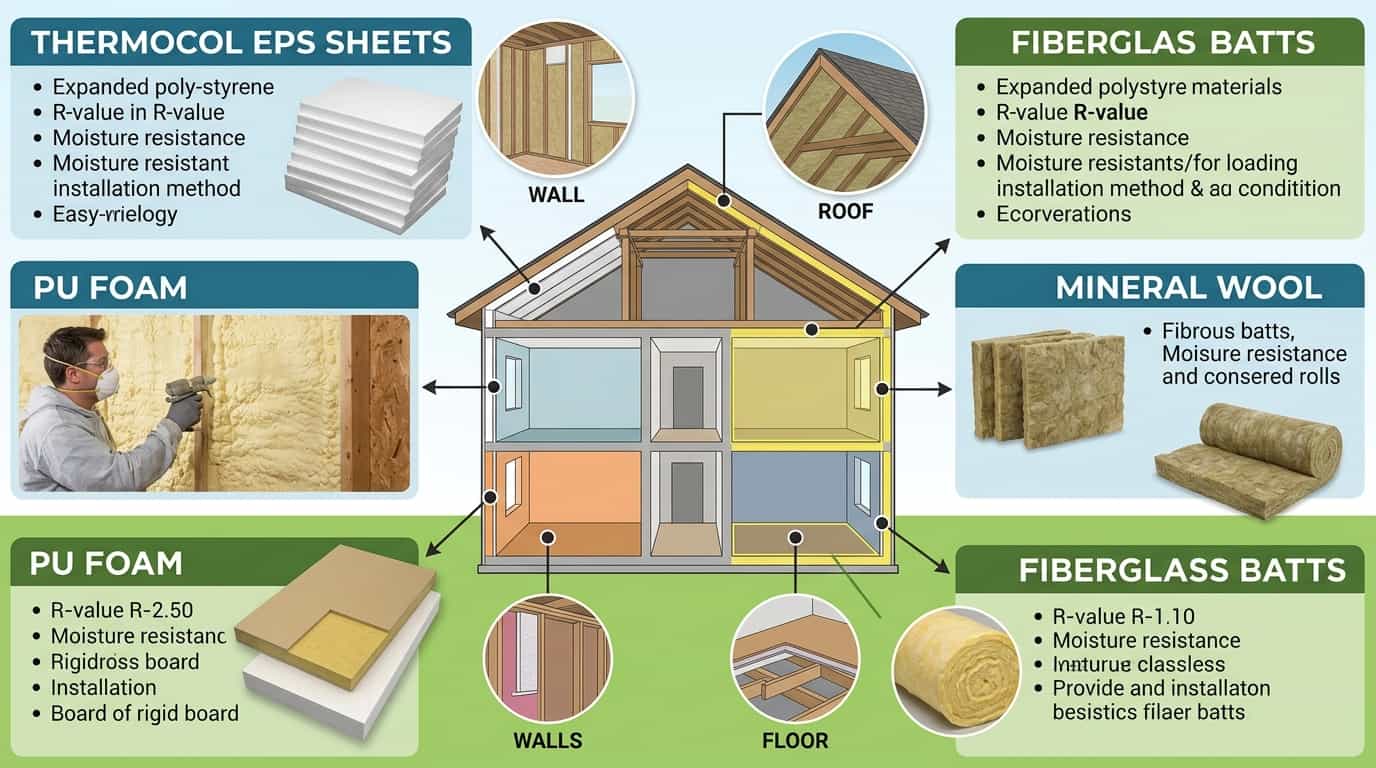
"Insulation" in Pakistan covers a surprisingly wide range of genuinely different problems, a hot roof, a scalding water tank, a leaking terrace, a noisy bedroom, a cold storage facility that's bleeding electricity cost. Each one has a specific product that solves it, and buying the wrong one wastes money without fixing anything. This guide starts from your actual problem, not from a product name, and points you to the right fix.
Start Here: What's Actually Bothering You?
Before choosing a product, be honest about what you're trying to fix. Most Pakistani insulation purchases fall into one of six starting points:
"My house/roof is unbearably hot in summer" → You need Thermocol/EPS Sheet or Roof Heat Proofing
"My rooftop water tank water is scalding hot" → You need Water Tank Insulation
"My roof leaks during monsoon, or I have damp walls" → You need Waterproofing Services
"I need irregular surfaces sealed against both heat and water at once" → You need PU Foam Spray
"I need to ship or store temperature-sensitive goods" → You need EPS Boxes (shipping) or Cold Storage Insulation (facility)
"My room is too noisy, or sound carries between rooms" → You need Soundproofing
If more than one of these describes your situation, you likely need more than one product, see the combination guidance further down.
Room-by-Room: Matching Insulation to Where the Problem Is
The Roof
This is where most Pakistani insulation spending happens, and for good reason, RCC roofs absorb enormous heat through direct summer sun exposure, then radiate it into the rooms below for hours after sunset.
Budget-conscious, simple flat roof: Thermocol/EPS Sheet, 2-inch sheets are the standard recommendation, delivering strong heat reduction at the lowest cost per square foot of any roof insulation option.
Want maximum performance, or roof also leaks: PU Foam Spray, creates a seamless, gap-free layer that insulates and waterproofs in a single application, ideal for irregular roof shapes where sheet joints would be a weak point.
Budget for a combined system: A Roof Heat Proofing package combining thermocol with reflective chemical coating gives the best overall result, chemical coating reflects surface heat, thermocol blocks conductive heat transfer, and together they outperform either method alone.
The Rooftop Water Tank
A completely separate problem from roof heat, even though it's caused by the same summer sun. Standard uninsulated tanks can reach 55-70°C internally during peak afternoon exposure, genuinely dangerous for children and elderly household members, not just uncomfortable.
Already own a tank, want a budget fix: An insulation cover/wrap (see Water Tank Insulation guide) retrofits onto your existing tank.
Buying a new tank: Choose an insulated tank from the start, the price premium (20-35% over standard) is worth it if you're buying new anyway.
Bathroom, Kitchen, and Basement Walls
Not a heat problem, a moisture problem. This is Waterproofing Services territory, not thermocol or PU foam.
Bathroom before tiling: Cementitious waterproofing chemical applied beneath tiles prevents leaks from spreading into adjacent rooms and ceilings below.
Basement walls: Cementitious or bitumen-based coatings protect against rising damp and groundwater infiltration.
Bedrooms and Home Offices
If the complaint is noise, traffic, neighbors, echo during video calls, this is Soundproofing territory, and it's worth understanding the difference between "sounds better" and "blocks sound" before buying (covered in full on the Soundproofing page).
Commercial: Cold Chain and Shipping
Two genuinely different needs that get confused:
Building a walk-in cooler or cold room: Cold Storage Insulation, structural PUF/PIR sandwich panels, sized by target temperature.
Shipping perishable goods in individual packages: EPS Boxes, thermocol/ice boxes sized for food, pharma, or seafood transport.
When You Need More Than One Product
Real Pakistani homes rarely have just one problem. Common combinations we see:
Heat + leak on the same roof: PU Foam Spray solves both in one application, genuinely the most efficient choice when both problems exist together, even though it costs more per sq ft than thermocol alone.
Have questions about this?
Chat with us on WhatsApp. We usually reply within minutes.
Hot roof + hot water tank: These are separate products (Thermocol/Roof Heat Proofing for the roof, Water Tank Insulation for the tank), don't assume fixing one fixes the other, since they're independent heat sources even though both are driven by the same summer sun.
Monsoon prep, comprehensive: Waterproofing (roof + walls) is worth doing alongside heat proofing rather than as a separate later project, since much of the roof-access labour overlaps, ask your installer about bundling both into one visit.
A Quick Word on Budget Sequencing
If you can't do everything at once, here's the practical priority order for most Pakistani homes, based on which problem costs the most in ongoing damage or electricity waste if left unaddressed:
- Active leaks (waterproofing), unaddressed water damage compounds and gets more expensive to fix the longer it's left
- Roof heat (thermocol or PU foam), directly offsets AC electricity cost, typically paying back within 1-2 summer seasons
- Water tank heat, lower cost to fix, meaningful daily comfort improvement
- Soundproofing / cold storage / shipping insulation, typically need-driven rather than universal, so sequence based on your specific situation
Explore Our Full Insulation Range
- Insulation Services, Main Hub
- Thermocol/EPS Sheet
- Roof Heat Proofing
- Water Tank Insulation
- PU Foam Spray
- Waterproofing Services
- Soundproofing
- EPS Boxes / Thermocol Packaging
- Cold Storage Insulation
Frequently Asked Questions
Q1: What type of insulation is best for a Pakistani roof? For most Pakistani homes, 2-inch thermocol/EPS sheet offers the best value for straightforward flat roofs, while PU foam spray is worth the premium for irregular roof shapes or roofs that also need waterproofing. A combined system, thermocol plus reflective chemical coating, typically delivers the strongest overall heat reduction for a moderate budget. See our Thermocol Sheet and Roof Heat Proofing guides for detailed pricing.
Q2: How do I know if I need water tank insulation or roof insulation? These solve different problems even though both stem from summer sun exposure. If your complaint is a hot house/rooms, you need roof insulation (thermocol or PU foam spray). If your complaint is scalding-hot tap water from a rooftop tank, you need water tank insulation specifically, fixing one does not fix the other, since they're independent heat sources.
Q3: Is PU foam spray worth the extra cost compared to thermocol sheet? Yes, specifically when your roof has an irregular shape, existing leaks, or both heat and water problems simultaneously, PU foam spray solves both in one seamless application. For a simple, flat, leak-free roof where budget is the primary concern, standard thermocol sheet delivers strong value at a significantly lower cost per square foot.
Q4: What's the difference between soundproofing and acoustic treatment? Acoustic treatment (foam or fabric panels) absorbs sound within a room to reduce echo and improve clarity, it does not stop sound from passing between rooms. True soundproofing requires denser materials and sealed construction to block sound transmission. Many products marketed as "soundproofing panels" in Pakistan are actually acoustic treatment. See our Soundproofing guide for the full distinction.
Q5: Should I waterproof and heat-proof my roof at the same time? Yes, if budget allows, combining both into one project is more efficient than doing them separately later, since much of the roof-access labour overlaps between the two jobs. This is particularly worth considering before monsoon season if your roof also suffers from summer heat.
Q6: What insulation do I need for shipping food or medicine versus building a cold room? These are different products for different scales. Shipping individual packages (food delivery, pharma, seafood) needs thermocol/EPS boxes sized to the shipment. Building a permanent walk-in cooler, cold room, or commercial refrigeration space needs structural PUF or PIR sandwich panels engineered for your target temperature range. See our EPS Boxes and Cold Storage Insulation guides respectively.
Q7: If I can only afford one insulation project this year, what should I prioritize? Active leaks first, unaddressed water damage compounds and becomes more expensive the longer it's left unfixed. Roof heat insulation is next, since it directly offsets AC electricity costs and typically pays back within 1-2 summer seasons. Water tank insulation and soundproofing are generally lower urgency unless your specific situation makes them a priority (e.g., a child in the household affected by scalding tap water).
Have questions about this?
Chat with us on WhatsApp. We usually reply within minutes.