Turn on the "cold" tap in a Pakistani summer and the water that comes out is anything but cold, sometimes hot enough to be genuinely uncomfortable, or even mildly dangerous for a young child. This isn't a fault or a defect. It's basic physics acting on a design choice most Pakistani homes share: an unprotected black or white plastic tank sitting in direct rooftop sun for 10+ hours a day. Here's exactly why it happens, and what actually fixes it.
The Simple Reason: Your Tank Has No Thermal Barrier
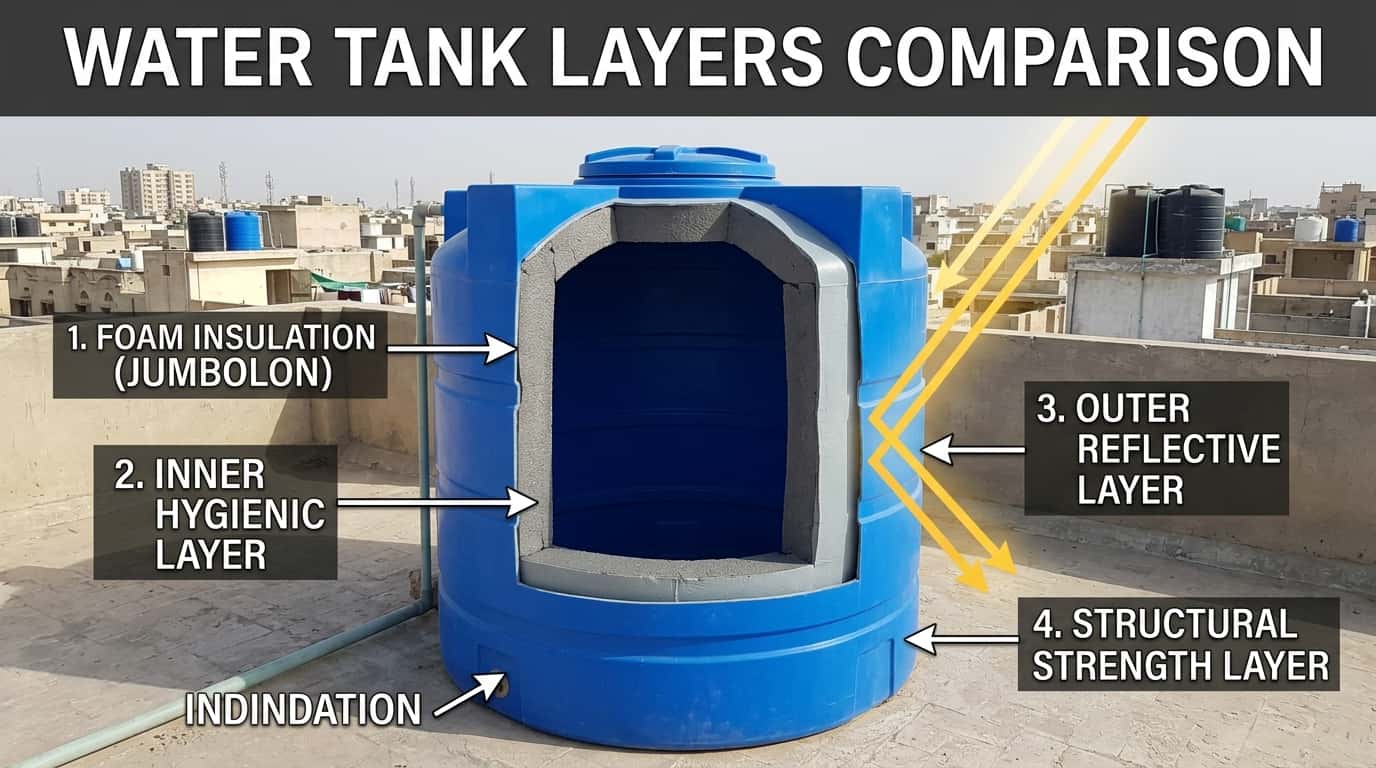
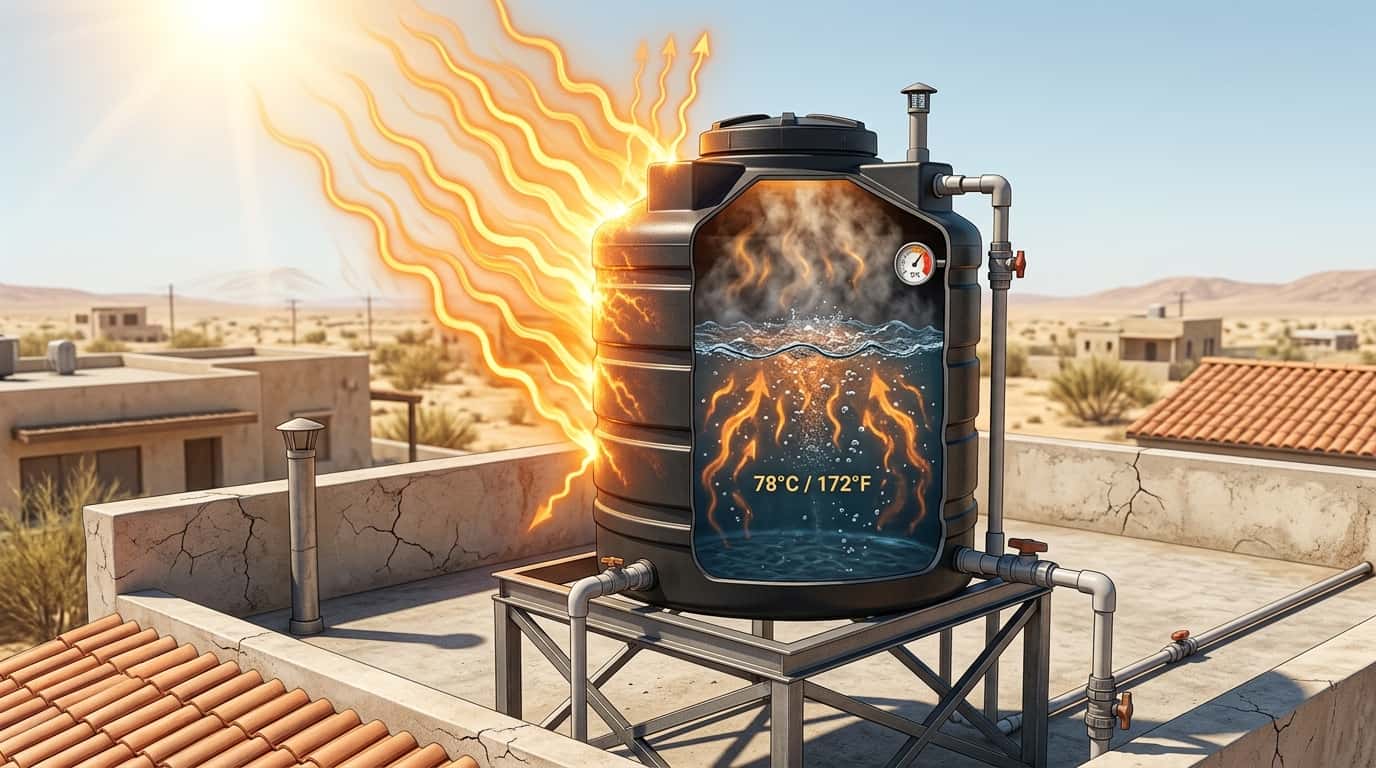
A standard rooftop water tank is essentially a thin-walled plastic container with nothing between the sun and the water inside except a few millimetres of plastic. During a sunny day, when the maximum outside temperature reaches around 48°C, genuinely common across much of Pakistan in peak summer, the temperature inside the tank reaches roughly the same level.
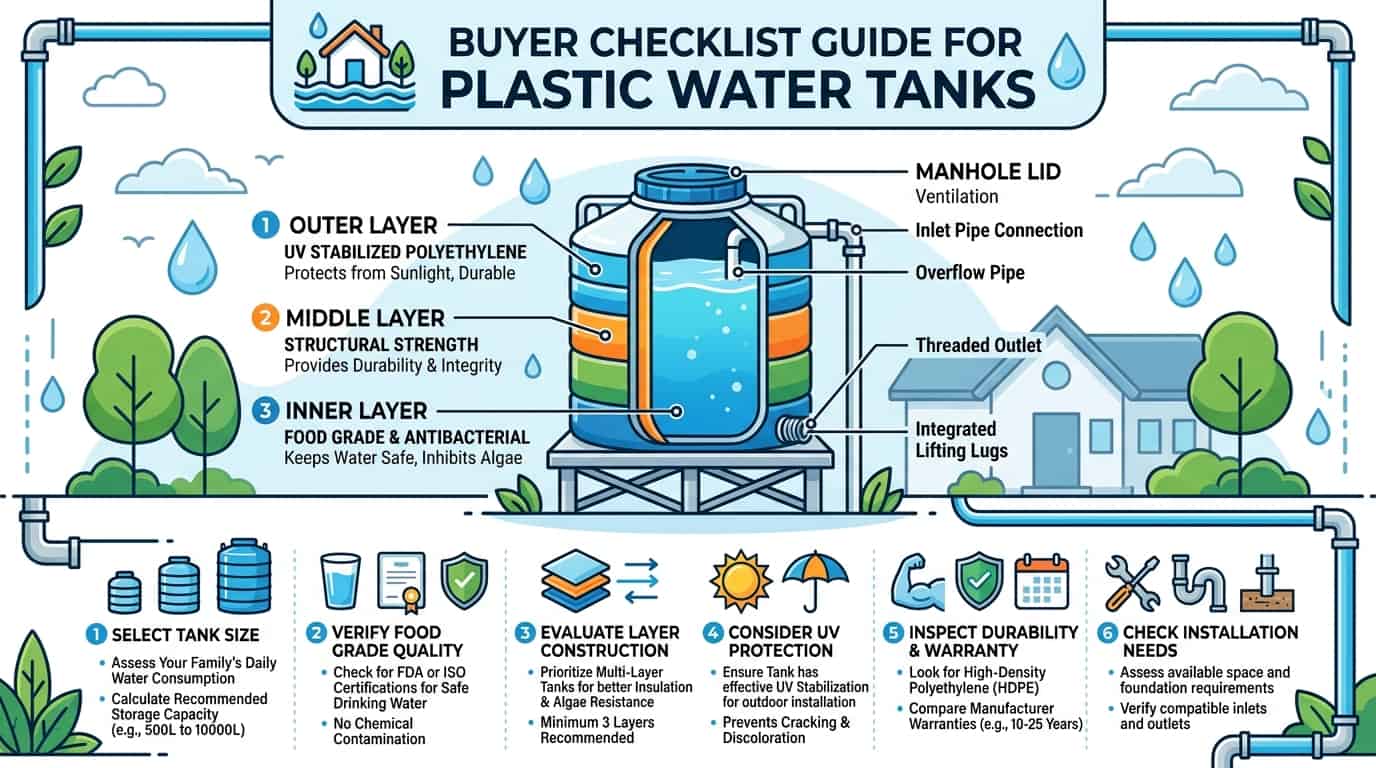
Even "better" tanks aren't immune. Even a five-layered white tank, marketed specifically for better heat resistance, can still see internal water temperatures around 46°C in the same conditions, better than a basic single-layer tank, but still uncomfortably hot, not genuinely cool.
The colour of your tank does matter, just not enough on its own. Light-coloured surfaces reflect more light than dark-coloured ones, which is why white tanks perform somewhat better than black ones, but colour alone doesn't provide a real thermal barrier. It reduces the problem; it doesn't solve it.
Why This Is Specifically a Pakistani-Climate Problem
Pakistan's practice of storing water in tanks installed on rooftops, then distributing it through the house via connected pipes, is standard, practical, but it puts the entire water supply chain directly in the sun's path. Add rising regional temperatures in recent years, and the problem has genuinely gotten worse over time, not stayed constant.
It's not just the tank either, exposed PPRC (plastic) or GI (metal) pipes running across an open rooftop absorb heat directly, meaning water can arrive hot at the tap even if the tank itself were somehow cooler. This is why a tank-only fix sometimes still leaves warm water at the tap, particularly on longer exposed pipe runs.
The 3 Real Ways to Actually Fix This
1. The Quick, Free Fix (Works Today, But Only Barely)
Pour the hot tap water into a bucket or container and let it sit for a few minutes to cool before using it for bathing, cleaning, or watering plants. This genuinely works as an emergency stopgap, but if you're doing this every single time you need water throughout a Pakistani summer, it becomes a real daily hassle rather than a solution, worth knowing about, not worth living with long-term.
2. The Medium Fix, Reflective Coating + Tank Position
Applying a 100% pure exterior acrylic reflective coating to the tank's exterior deflects sunlight and reduces heat absorption, offering a genuinely affordable improvement over an untreated tank. Position matters too, the main reason behind hot water is direct sunlight exposure, so relocating the tank to a shaded position (even partial shade from a nearby structure) meaningfully helps where it's physically possible.
Combine this with pipe insulation on the exposed section connecting the tank to the house, insulating just this run, rather than the whole property's plumbing, is a genuinely cost-effective partial fix if a full tank solution isn't in budget yet.
3. The Permanent Fix, Proper Tank Insulation
A dedicated insulated tank, or a retrofit insulation cover/jacket on your existing tank, is the only approach that genuinely solves the root problem rather than reducing its severity. Insulated tanks and covers create a real thermal barrier, the same principle as insulating a house wall, physically blocking heat transfer rather than just reflecting some of it away.
This is meaningfully different from reflective coating alone: coating reduces how much heat the tank absorbs from direct sun; insulation blocks heat transfer through the tank wall regardless of how much the surface absorbs. For genuinely hot climates and rooftop-exposed tanks, insulation is the more complete fix.
See our full Water Tank Insulation guide for current pricing on insulated tanks and retrofit covers.
Have questions about this?
Chat with us on WhatsApp. We usually reply within minutes.
What About Active Cooling Systems?
For larger tanks or particularly extreme heat situations, water chillers or circulation pumps offer an active cooling approach, technology that actively lowers water temperature rather than passively reducing heat gain. These are a more expensive, more commercial-scale option, generally not the practical first choice for a standard residential rooftop tank, but worth knowing exists for larger or commercial applications.
Don't Forget the Roof Itself
If your whole house feels hot, not just the tank water, the tank is likely one symptom of a bigger problem, direct heat radiation through the concrete roof itself. Concrete has a real tendency to absorb heat, meaning even with a perfectly insulated tank, a genuinely hot roof will keep the rooms below uncomfortably warm regardless. See our Roof Heat Proofing guide for the broader fix if tank heat is just one part of a hotter-than-it-should-be house.
Related Guides
- Water Tank Insulation, Full Pricing Guide
- Roof Heat Proofing
- Water Tank Cleaning in Pakistan
- Insulation Services, Full Range
Frequently Asked Questions
Q1: Why does my rooftop water tank get so hot in summer? Standard plastic water tanks have essentially no thermal barrier between the sun and the water inside, during peak Pakistani summer, when outside temperatures reach around 48°C, tank interior temperatures reach roughly the same level. Even premium five-layered white tanks can still hit around 46°C internally in the same conditions, since colour and layering reduce but don't eliminate the problem.
Q2: Does a white water tank stay cooler than a black one? Yes, to a degree, light-coloured surfaces reflect more sunlight than dark-coloured ones, so white tanks do run somewhat cooler than black tanks in identical conditions. However, colour alone doesn't provide genuine thermal insulation; it reduces heat absorption rather than blocking heat transfer, so a white tank still gets uncomfortably hot in Pakistan's summer, just less hot than a black equivalent.
Q3: What is the fastest way to get cooler water right now without buying anything? Pour hot tap water into a bucket and let it sit for a few minutes to cool before use, this works as an immediate, free fix for bathing, cleaning, or watering plants. It's genuinely impractical as a long-term solution if you need water repeatedly throughout the day, but it's useful while you plan a more permanent fix.
Q4: What's the difference between a reflective coating and proper tank insulation? Reflective coating reduces how much heat the tank absorbs from direct sunlight by deflecting light away from the surface, an affordable, moderate improvement. Proper insulation (an insulated tank or retrofit cover) creates a genuine thermal barrier that blocks heat transfer through the tank wall regardless of surface absorption, making it the more complete, permanent solution for genuinely hot climates.
Q5: Do exposed pipes also contribute to hot tap water, not just the tank? Yes, exposed plastic (PPRC) or metal (GI) pipes running across an open rooftop absorb heat directly from sun exposure, meaning water can still arrive hot at the tap even with a cooler tank, particularly on longer exposed pipe runs. Insulating the exposed section of pipe between the tank and the house is a cost-effective addition to tank-level fixes.
Q6: Is tank position (shaded vs. direct sun) a genuine factor? Yes, direct sunlight exposure is the primary reason tanks get hot, so relocating a tank to even partial shade, where physically possible, meaningfully reduces the problem. This is a free or low-cost fix worth considering alongside coating or insulation, though it's often limited by actual rooftop layout and available shade.
Q7: Should I get an insulated tank or just add a cover to my existing tank? If you're buying new, an insulated tank from the start avoids the extra step and cost of retrofitting. If you already own a standard tank in good condition, a retrofit insulation cover/jacket is the more budget-friendly option, since it adds thermal protection without replacing a tank that otherwise still works fine. See our Water Tank Insulation guide for pricing on both options.
Have questions about this?
Chat with us on WhatsApp. We usually reply within minutes.