Both keep things cold. Both are widely available in Pakistan. But thermocol ice boxes and hard plastic coolers are genuinely different products serving different needs, at genuinely different price points, and buying the wrong one for your actual use case means either overspending or underperforming.
Looking at business/bulk use instead of personal? See our EPS Boxes guide for commercial and industry-specific sizing.
What Each Product Actually Is
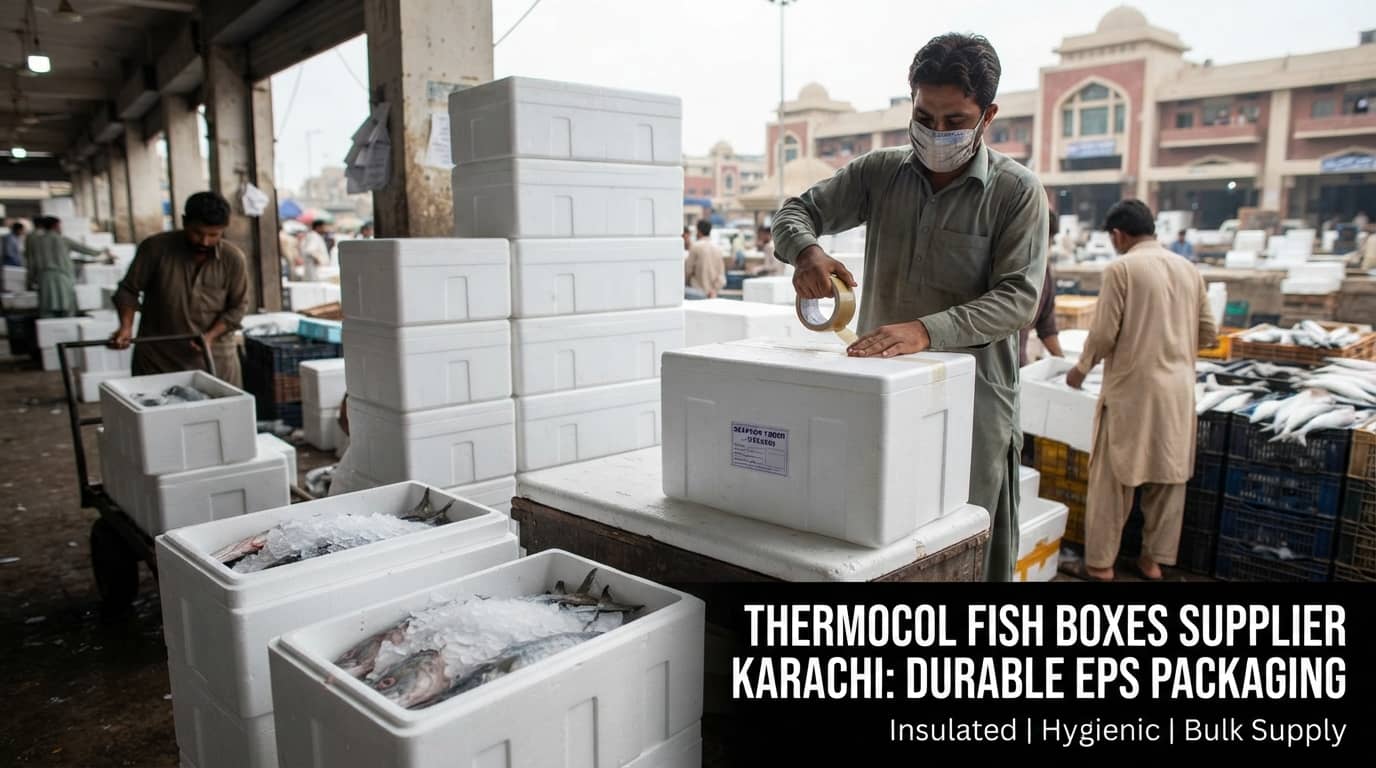
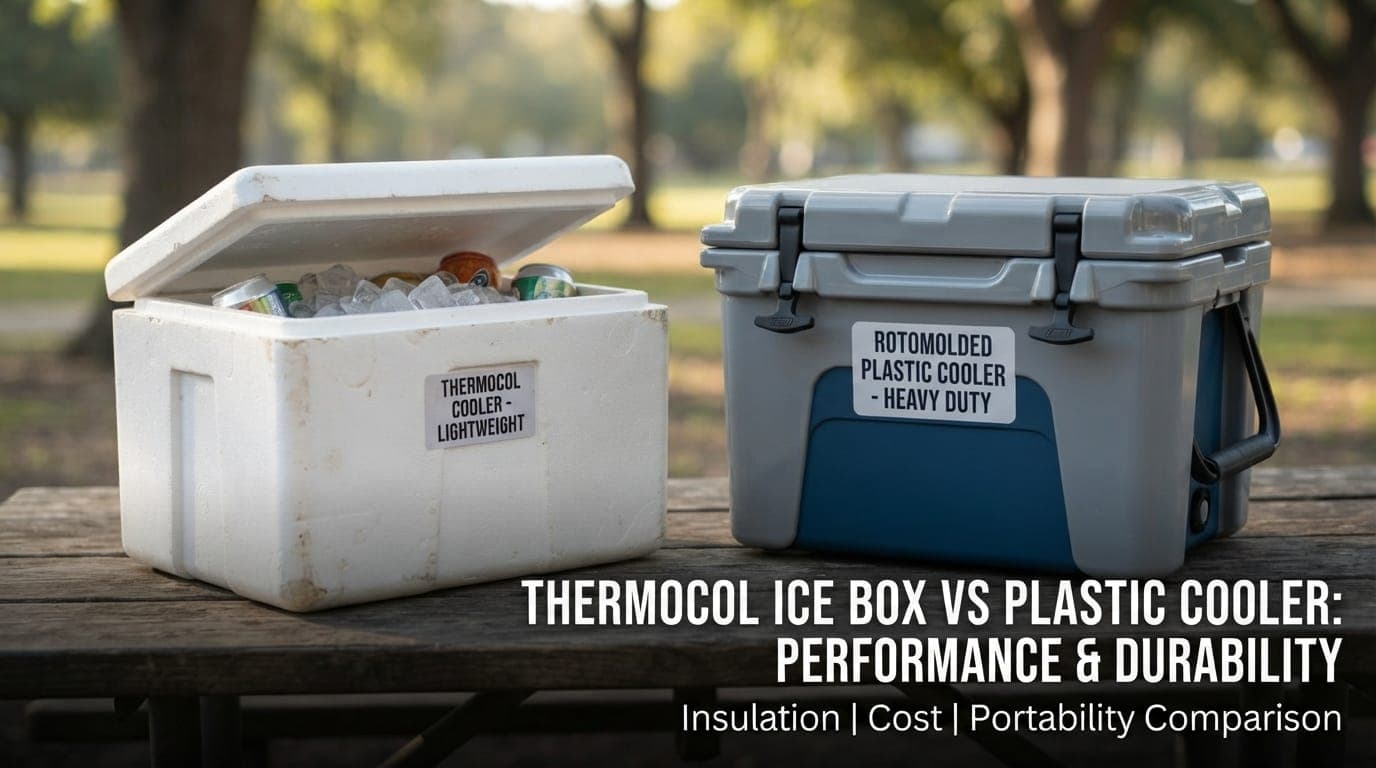
Thermocol ice box is made from expanded polystyrene (EPS), white, rigid, lightweight, and insulating through trapped air pockets within its foam structure. This is the affordable, often single-use or limited-reuse option most Pakistani households and small businesses default to.
Hard plastic cooler is typically constructed from high-density polyethylene (HDPE) or rotomolded polyethylene, a genuinely different material and manufacturing process, producing a durable, reusable, impact-resistant container designed for repeated long-term use, often for years.
Price Comparison, The Gap Is Larger Than Most Buyers Expect
| Product | Price Range (PKR) |
|---|---|
| Thermocol ice box (small-medium) | 250 – 1,200 |
| Thermocol ice box (bulk/commercial) | 2,500 – 6,000 |
| Hard plastic cooler (small-medium, branded) | 5,000 – 25,000 |
| Hard plastic cooler (large, premium/marine grade) | 50,000 – 120,000+ |
The price gap is genuinely substantial, a premium large plastic cooler can cost 50-100x what an equivalent-size thermocol box costs. This isn't necessarily a "the plastic cooler is overpriced" situation; it reflects a fundamentally different product built for a different use pattern.
Performance Comparison
Insulation duration: ice typically lasts around 10 hours in a thermocol box, depending on ambient temperature, box thickness, and lid fit. Quality hard plastic coolers, with thicker walls and better-sealing lids, often maintain ice significantly longer, some premium models are marketed for multi-day ice retention, genuinely useful for extended trips rather than single-day use.
Durability: thermocol is lightweight but genuinely fragile, it dents, cracks, and crushes under real mechanical stress, and isn't designed to survive being dropped, sat on, or repeatedly loaded/unloaded over months of use. Hard plastic coolers are built specifically for impact resistance and repeated heavy use, holding up to conditions that would destroy a thermocol box within days.
Water resistance: both are inherently waterproof in construction, but plastic coolers handle sustained wet conditions and rough outdoor use more reliably over time than thermocol, which can develop structural weakness with repeated water exposure even though it doesn't absorb water the way some materials do.
UV resistance: prolonged UV exposure can cause some plastics to become brittle or fade over time; premium plastic coolers incorporate UV stabilizers specifically to extend outdoor-use lifespan, a consideration less relevant to thermocol, which typically isn't used for repeated long-term outdoor exposure the way a cooler might be.
Which Should You Actually Buy?
Choose a thermocol ice box when: you need affordable, one-time or occasional-use cold storage, a single event, an occasional food delivery, a single seafood transport run, or any situation where the box itself is essentially disposable or near-disposable. Budget-conscious, low-frequency use is thermocol's genuine strength.
Choose a hard plastic cooler when: you need cold storage repeatedly over months or years, regular camping trips, ongoing outdoor work requiring cold storage, a business needing a durable reusable container rather than repeated disposable purchases, or any situation where the cooler will face real physical handling stress (being dropped, sat on, transported roughly) that thermocol wouldn't survive.
Have questions about this?
Chat with us on WhatsApp. We usually reply within minutes.
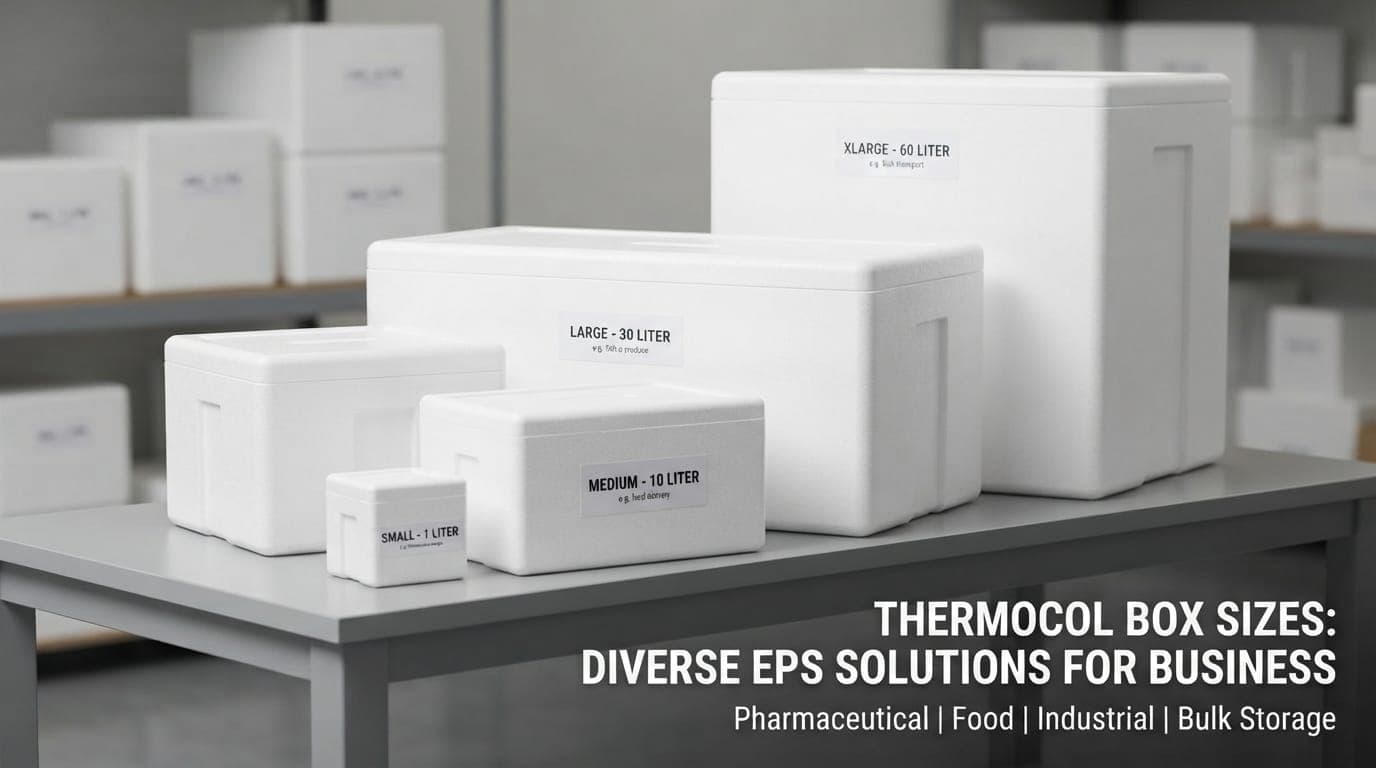
The genuine crossover point: for businesses shipping frequently at meaningful volume, the math can favor either option depending on frequency, very high-frequency, high-volume shipping sometimes favors Hi-D (high-density) reusable thermocol boxes as a middle ground, since they're more durable than standard thermocol without the full cost of premium hard plastic coolers. See our Thermocol Box Sizes guide for this middle-tier option.
The Honest Bottom Line
If you're comparing these two products purely on price, thermocol wins by a wide margin, but that comparison only makes sense if you're evaluating them for the same use case, and they genuinely aren't built for the same use case. A plastic cooler bought for occasional single-day use is likely overspending; a thermocol box bought for frequent, rough, repeated outdoor use will likely need frequent replacement, potentially costing more in total than one durable plastic cooler would have over the same period.
Related Guides
- EPS Boxes / Thermocol Packaging, Full Pricing Guide
- Thermocol Box Sizes for Every Business
- Insulation Services, Full Range
Frequently Asked Questions
Q1: What is the price of a plastic cooler in Pakistan? Plastic coolers in Pakistan range from PKR 5,000-25,000 for small-to-medium branded models to PKR 50,000-120,000+ for large premium or marine-grade coolers. This is significantly more than equivalent-size thermocol ice boxes (PKR 250-6,000), reflecting the durable, reusable HDPE/rotomolded polyethylene construction built for years of repeated use. (Ahrefs SV: 100/mo, TP 14,000, one of the largest volume-to-potential gaps found in this entire research project)
Q2: How long does ice last in a thermocol box versus a plastic cooler? Ice typically lasts around 10 hours in a thermocol box, depending on ambient temperature, box thickness, and lid fit. Quality hard plastic coolers, with thicker walls and better-sealing lids, often maintain ice significantly longer, with some premium models marketed for multi-day ice retention on extended trips.
Q3: Is a thermocol ice box or plastic cooler more durable? Hard plastic coolers are significantly more durable, built specifically for impact resistance and repeated heavy use over months or years. Thermocol is lightweight but genuinely fragile, prone to denting, cracking, and crushing under mechanical stress, and generally isn't designed to survive rough handling or extended repeated use the way a plastic cooler is.
Q4: Should I buy a thermocol box or plastic cooler for occasional single-use needs? A thermocol ice box is the more sensible choice for occasional or one-time use, a single event, an occasional delivery, or infrequent transport needs, since its lower cost matches the lower usage frequency well. Buying an expensive durable plastic cooler for genuinely occasional use means paying for durability you won't actually use.
Q5: What is the best option for a business shipping items frequently? For businesses shipping frequently at meaningful volume, Hi-D (high-density) reusable thermocol boxes can serve as a middle-ground option, more durable than standard thermocol without the full cost of premium hard plastic coolers. See our Thermocol Box Sizes guide for industry-specific sizing and grade recommendations.
Q6: Are plastic coolers waterproof like thermocol boxes? Both are inherently waterproof in construction, but plastic coolers generally handle sustained wet conditions and rough outdoor use more reliably over an extended period than thermocol, which can develop structural weakness with repeated water exposure over time, even though it doesn't absorb water the way some materials do.
Q7: Why is there such a big price difference between thermocol boxes and plastic coolers? The price gap reflects genuinely different materials, manufacturing processes, and intended use patterns, thermocol (EPS foam) is designed for affordable, often single-use or limited-reuse applications, while hard plastic coolers (HDPE/rotomolded polyethylene) are engineered for years of durable, repeated, high-stress use. It's not that one product is overpriced; they're built for fundamentally different usage frequencies and conditions.
Have questions about this?
Chat with us on WhatsApp. We usually reply within minutes.