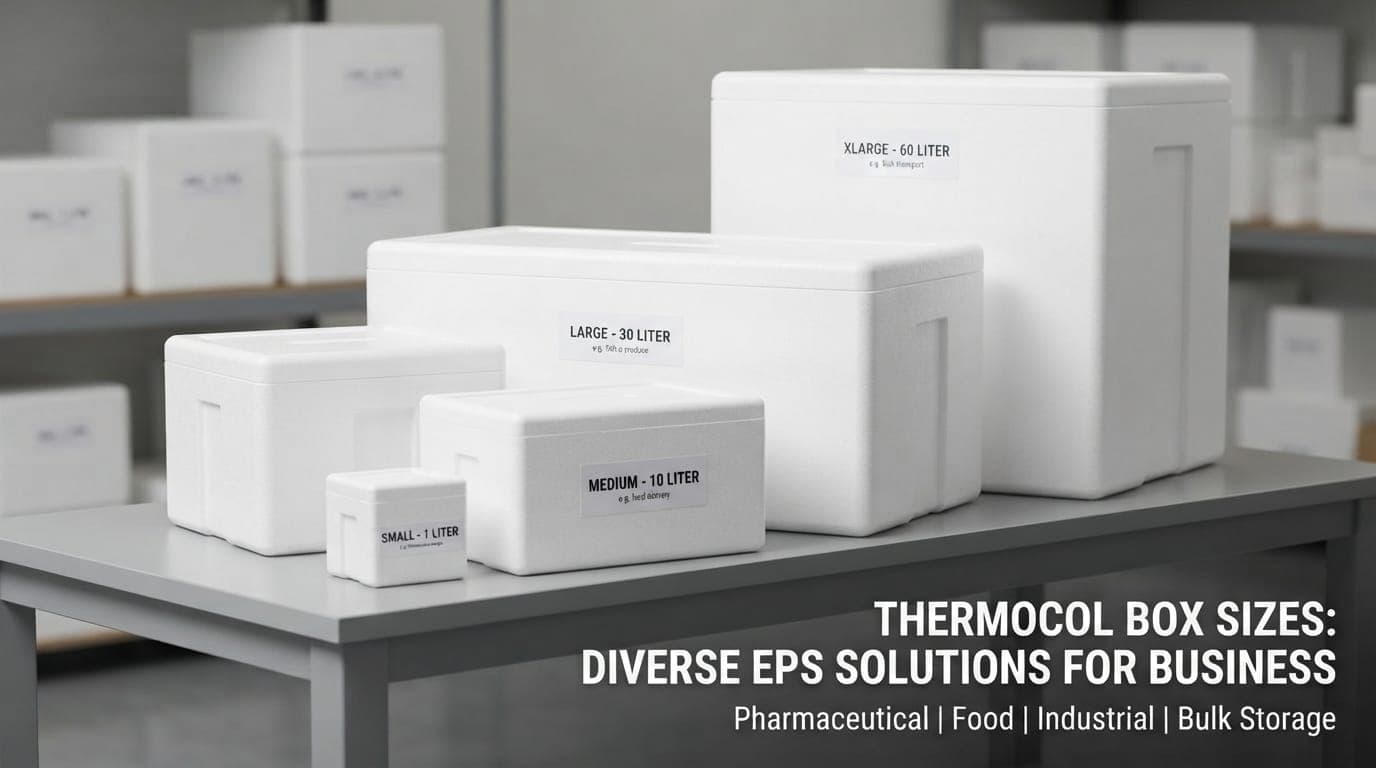
"What size thermocol box do I need?" doesn't have a single answer, it depends entirely on what you're shipping, how far, and how sensitive it is to temperature. Here's a practical breakdown by industry, based on what Pakistani businesses in each category actually order.
Full pricing across all sizes: see our EPS Boxes guide.
Food Delivery & Catering
Typical size range: Small to medium (2-15L capacity)
Food delivery businesses generally need boxes sized for single-order or small-batch delivery, large enough to keep a meal at safe temperature during transit, small enough to be practical for a delivery rider to carry on a motorbike. Catering businesses handling larger event orders scale up to the medium-to-bulk range, particularly for maintaining food temperature across multi-hour events.
Practical consideration: disposable, single-use grade boxes are standard here, since food delivery packaging typically isn't returned or reused, cost-efficiency at this volume matters more than the reusability that matters for other industries below.
Seafood Industry (Karachi-Concentrated)
Typical size range: Medium to bulk/commercial (15-100L+)
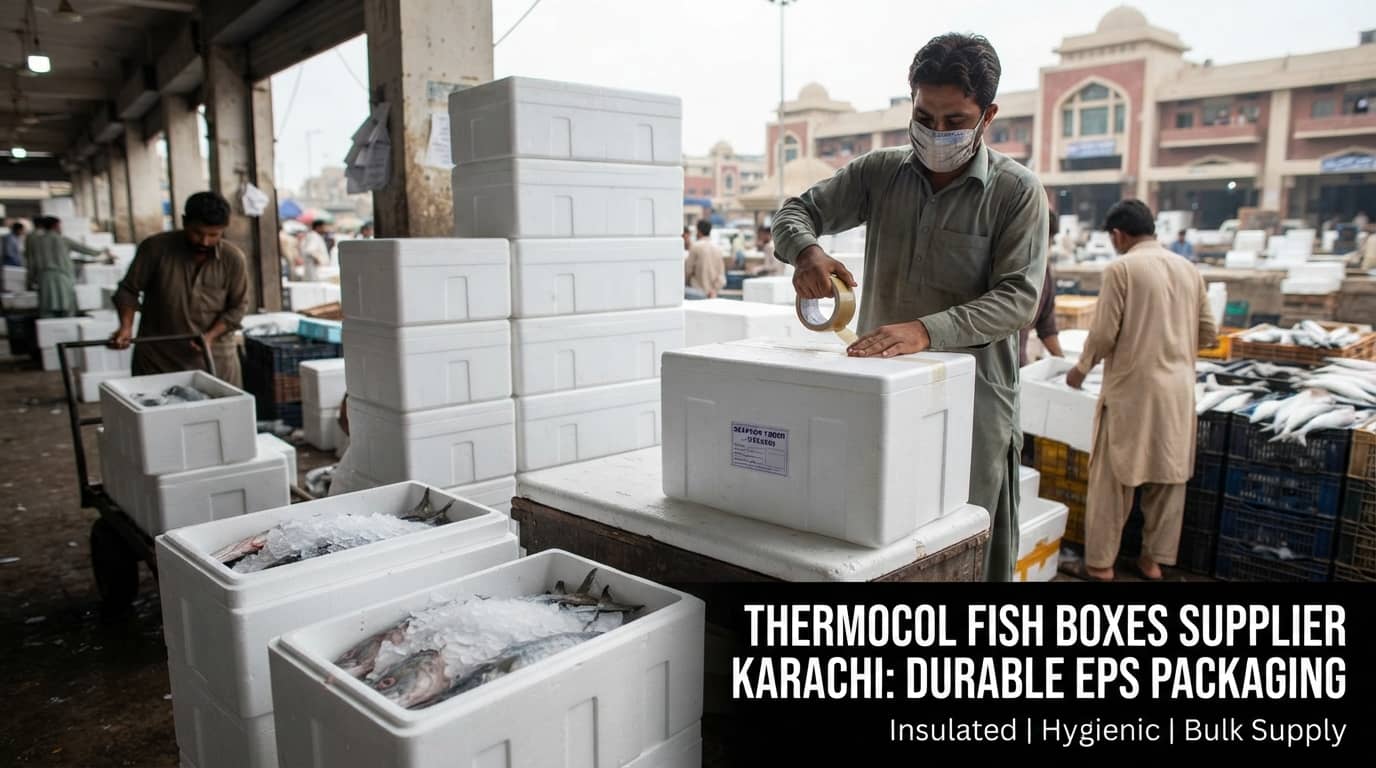
Karachi's active seafood supply chain moves substantial volume daily from harbor to market, and fish boxes here need reinforced construction specifically, wet, cold, ice-packed conditions are harder on a box than dry food transport, and reinforced fish-specific boxes handle this better than standard general-purpose thermocol boxes.
Practical consideration: bulk/wholesale seafood operations often benefit from Hi-D (high-density) reusable grade boxes rather than disposable, given the frequency and volume of repeated shipments, the higher upfront cost pays back quickly at commercial shipping volume.
Pharmaceutical & Medical
Typical size range: Small to medium, precision-matched to shipment
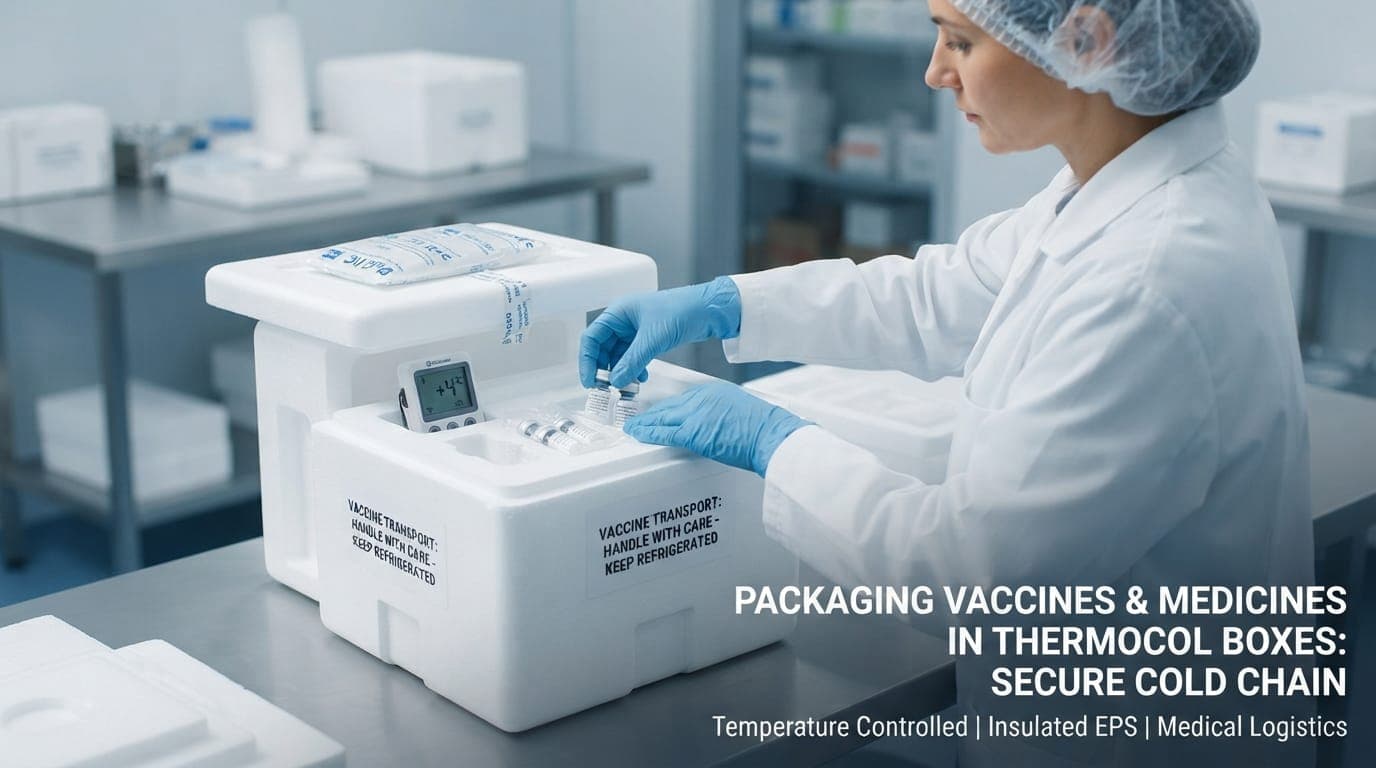
Pharmaceutical shipping, vaccines, insulin, general medicine, blood samples, has the tightest requirements of any category covered here, since temperature stability during transit is a genuine patient-safety issue, not just a product-quality concern. Box sizing here should be matched precisely to the actual shipment volume rather than oversized, since excess air space inside a box can actually reduce cold-retention efficiency compared to a properly sized box with adequate ice packs or gel packs.
Practical consideration: this category most benefits from consistent, quality-controlled box sourcing, the cost difference between a reliable supplier and an unreliable one matters more here than in lower-stakes categories, given what's at risk if temperature control fails during transit.
Dairy Products
Typical size range: Medium (5-30L)
Milk, butter, cheese, and yogurt transport particularly benefits from insulated thermocol packaging during Pakistan's hot summer months, when the gap between "safely chilled" and "spoiled" narrows considerably during transit time. Dairy distributors typically need a size range that scales with delivery route volume, smaller boxes for direct-to-consumer delivery, larger for retail/wholesale distribution runs.
Practical consideration: dairy transport often benefits from boxes specifically designed to work well with ice packs or dry ice depending on the product and required temperature range, confirm with your supplier which grade suits your specific dairy product line.
Ice Cream & Frozen Goods
Typical size range: Medium to bulk, paired with dry ice
Frozen product transport, particularly ice cream, requires sub-zero temperature maintenance that standard ice-pack cooling can't achieve, meaning these boxes are typically used in combination with dry ice for genuinely effective sub-zero performance during extended transit times.
Have questions about this?
Chat with us on WhatsApp. We usually reply within minutes.
Quick Reference, Sizing by Business Type
| Business Type | Typical Size Range | Grade Recommendation |
|---|---|---|
| Food delivery | 2-15L | Disposable/standard |
| Catering (large events) | 15L-bulk | Disposable/standard |
| Seafood (retail volume) | 15-30L | Standard or Hi-D |
| Seafood (wholesale/commercial) | 30-100L+ | Hi-D reusable |
| Pharma/medical | Precision-matched, small-medium | Quality-controlled, consistent supply |
| Dairy | 5-30L | Standard, ice-pack compatible |
| Ice cream/frozen | Medium-bulk | Dry-ice compatible |
Related Guides
- EPS Boxes / Thermocol Packaging, Full Pricing Guide
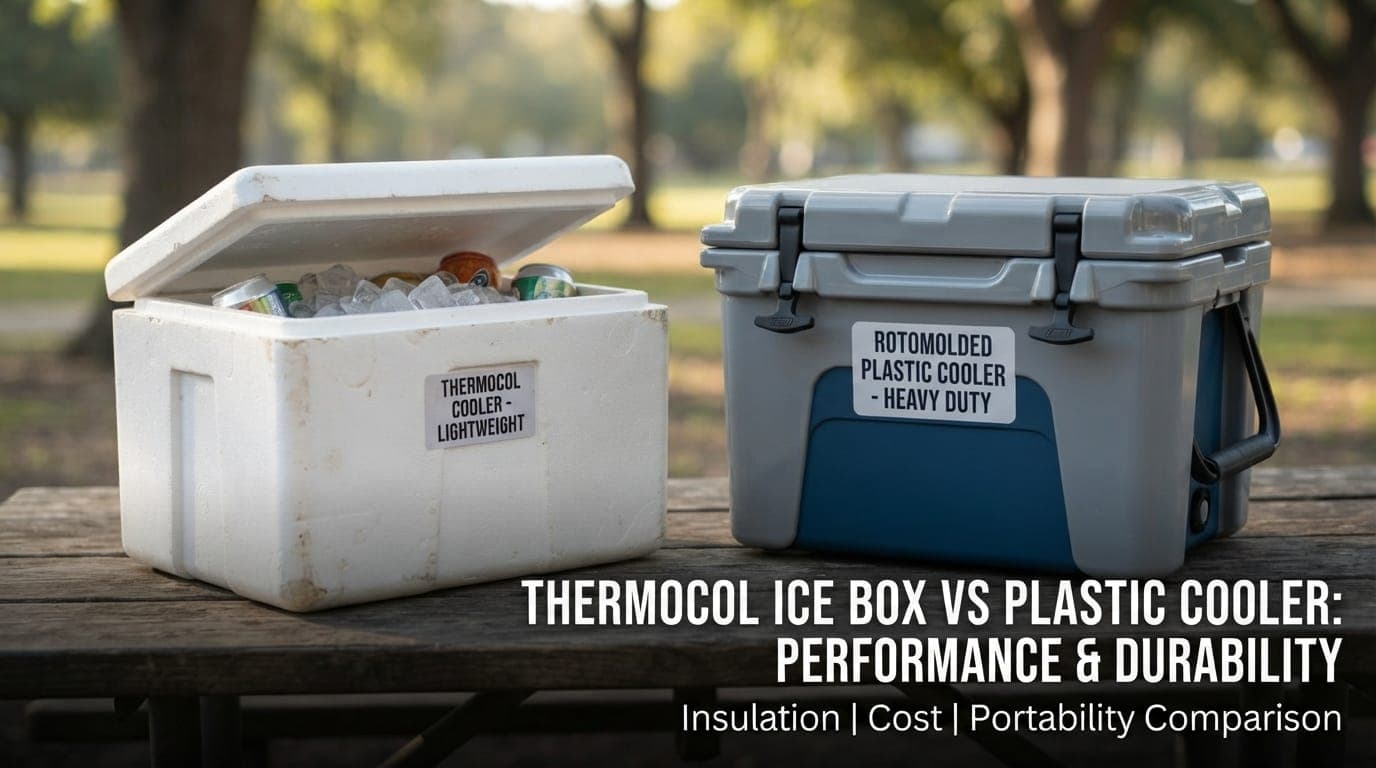
- Ice Box vs Hard Plastic Cooler
- Insulation Services, Full Range
Frequently Asked Questions
Q1: What size thermocol box do food delivery businesses typically use? Food delivery businesses generally use small to medium boxes (2-15L capacity), large enough to maintain safe food temperature during a typical delivery trip, small enough to be practical for a rider to carry. Catering businesses handling larger event orders scale up to medium-to-bulk sizes for maintaining temperature across multi-hour events.
Q2: What thermocol box size is used for seafood transport in Pakistan? Seafood transport typically uses medium to bulk/commercial sizes (15-100L+), with reinforced construction specifically suited to wet, cold, ice-packed conditions. Karachi's active seafood supply chain, given its volume, often benefits from Hi-D (high-density) reusable boxes rather than disposable ones for wholesale operations.
Q3: Why does pharmaceutical shipping need precisely-sized boxes rather than oversized ones? Excess air space inside an oversized box can actually reduce cold-retention efficiency compared to a properly sized box with adequate ice or gel packs, since more air volume means more thermal mass to keep cold. Given that temperature stability in pharma shipping is a genuine patient-safety concern, precise sizing to the actual shipment volume matters more here than in lower-stakes shipping categories.
Q4: What thermocol box size works best for dairy product delivery? Dairy distributors typically need medium boxes (5-30L), scaled to delivery route volume, smaller for direct-to-consumer delivery, larger for retail/wholesale distribution runs. This is particularly important during Pakistan's hot summer months, when the gap between safely chilled and spoiled narrows considerably during transit.
Q5: Do frozen goods like ice cream need special thermocol boxes? Yes, frozen product transport typically requires boxes used in combination with dry ice rather than standard ice packs, since dry ice achieves the sub-zero temperatures that ice packs alone can't maintain. Confirm your box grade is compatible with dry ice use before shipping frozen products.
Q6: Should I buy disposable or reusable (Hi-D) thermocol boxes for my business? This depends on shipping frequency and volume. Businesses shipping occasionally or in smaller volumes (most food delivery, smaller-scale catering) generally do fine with disposable, standard-grade boxes. Businesses shipping frequently at commercial volume (wholesale seafood, regular pharma logistics) often find Hi-D reusable boxes pay back their higher upfront cost quickly through repeated use.
Q7: Can I get custom-sized thermocol boxes for my specific business needs? Yes, custom sizing is generally available for business-specific dimensions beyond standard stock sizes, particularly useful for businesses with unusual shipment volumes or specific product dimensions that don't fit standard box sizes efficiently. See our EPS Boxes guide or contact us directly for custom size quotes.
Have questions about this?
Chat with us on WhatsApp. We usually reply within minutes.