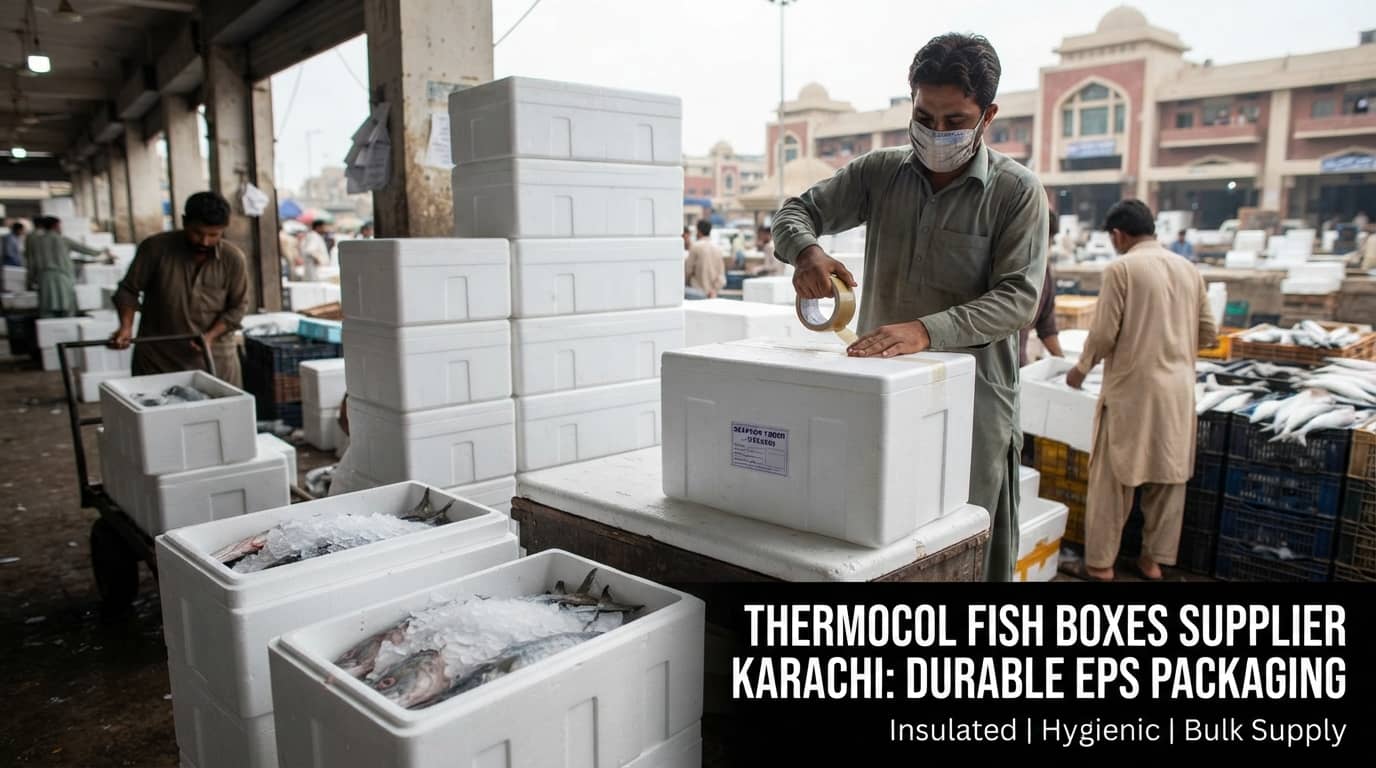
Karachi's seafood industry is genuinely substantial, the city's fish harbours, particularly West Wharf and Korangi Fisheries Harbour, sit at the center of Pakistan's seafood export and domestic supply chain. Behind every shipment of fresh catch moving from harbour to market sits a genuinely mundane but essential piece of infrastructure: the thermocol box. Here's what businesses in this space should know about sourcing it reliably.
Full pricing and sizing: see our EPS Boxes guide.
Karachi's Seafood Industry Scale, Why This Matters
Karachi's fish harbour ecosystem is genuinely large: dozens of active seafood companies operate through West Wharf and Korangi Fisheries Harbour, handling everything from local market fish to export-grade tuna, shrimp, and other seafood destined for international markets. Pakistan is actively expanding this infrastructure too, plans for a major seafood processing and export zone at Korangi Fisheries Harbour, targeting Gulf and regional markets, signal continued growth in the volume this ecosystem will need to move and package going forward.
This matters directly for thermocol box demand: every stage of that supply chain, from harbour to processor to distributor to final retail or export point, needs reliable, adequately reinforced packaging to maintain product quality during transit.
What to Look For in a Fish Box Supplier
Reinforced construction, not general-purpose boxes. Wet, cold, ice-packed seafood conditions are genuinely harder on packaging than dry goods transport, a fish box specifically designed for this use handles the combination of moisture, ice, and repeated handling better than a standard general-purpose thermocol box.
Consistent availability at volume. Seafood businesses shipping daily or near-daily need a supplier who can reliably deliver consistent stock, not one who runs out during peak season or high-demand periods.
Grade options matching your shipping frequency. Standard disposable-grade boxes suit occasional or lower-volume shipping; Hi-D (high-density) reusable boxes make more economic sense for businesses shipping frequently at commercial volume, since the higher upfront cost pays back quickly through repeated use. A good supplier should offer both and help you choose correctly rather than defaulting you to whichever they have more of in stock.
Size range matching actual shipment volume. From small retail-quantity boxes to bulk commercial sizes for wholesale export-scale shipments, your supplier should carry a genuine range rather than a single one-size option.
The Local-Supplier vs Nationwide-Delivery Question
Karachi businesses naturally default to searching for local suppliers first, genuinely reasonable given the logistics advantage of proximity for a perishable, time-sensitive product category. But it's worth considering nationwide suppliers with reliable Karachi delivery too, for a few practical reasons:
Consistency during demand spikes. Local suppliers with limited production capacity can run short during Karachi's peak seafood seasons; a nationwide supplier with broader manufacturing capacity is often more resilient to local demand spikes.
Pricing competition. A supplier serving multiple cities generally has more purchasing scale on raw materials, which can translate into more competitive pricing than a smaller, purely local operation.
Consistent quality and grade specification. A supplier who ships nationwide has necessarily standardized their grade and quality specifications to work across different climates and use cases, genuinely useful if your business has any operations beyond Karachi itself, or plans to expand.
Practical Buying Considerations for Karachi Seafood Businesses
Order ahead of peak season. Karachi's fishing seasons have genuine demand patterns, ordering your packaging supply ahead of predictable high-volume periods avoids the scramble (and potential price premium) of last-minute sourcing during peak demand.
Have questions about this?
Chat with us on WhatsApp. We usually reply within minutes.
Confirm delivery timeline to your specific harbour-area location. West Wharf, Korangi, and other harbour-adjacent business locations may have different delivery logistics than central Karachi, confirm this specifically with any supplier before committing to a regular order relationship.
Ask about bulk/wholesale pricing tiers. Given the genuine volume this industry moves, most suppliers offer meaningfully better per-unit pricing at bulk order quantities, this is worth negotiating specifically rather than accepting standard retail-tier pricing for what is, for most seafood businesses, a recurring, predictable-volume purchase.
Related Guides
- EPS Boxes / Thermocol Packaging, Full Pricing Guide
- Thermocol Box Sizes for Every Business
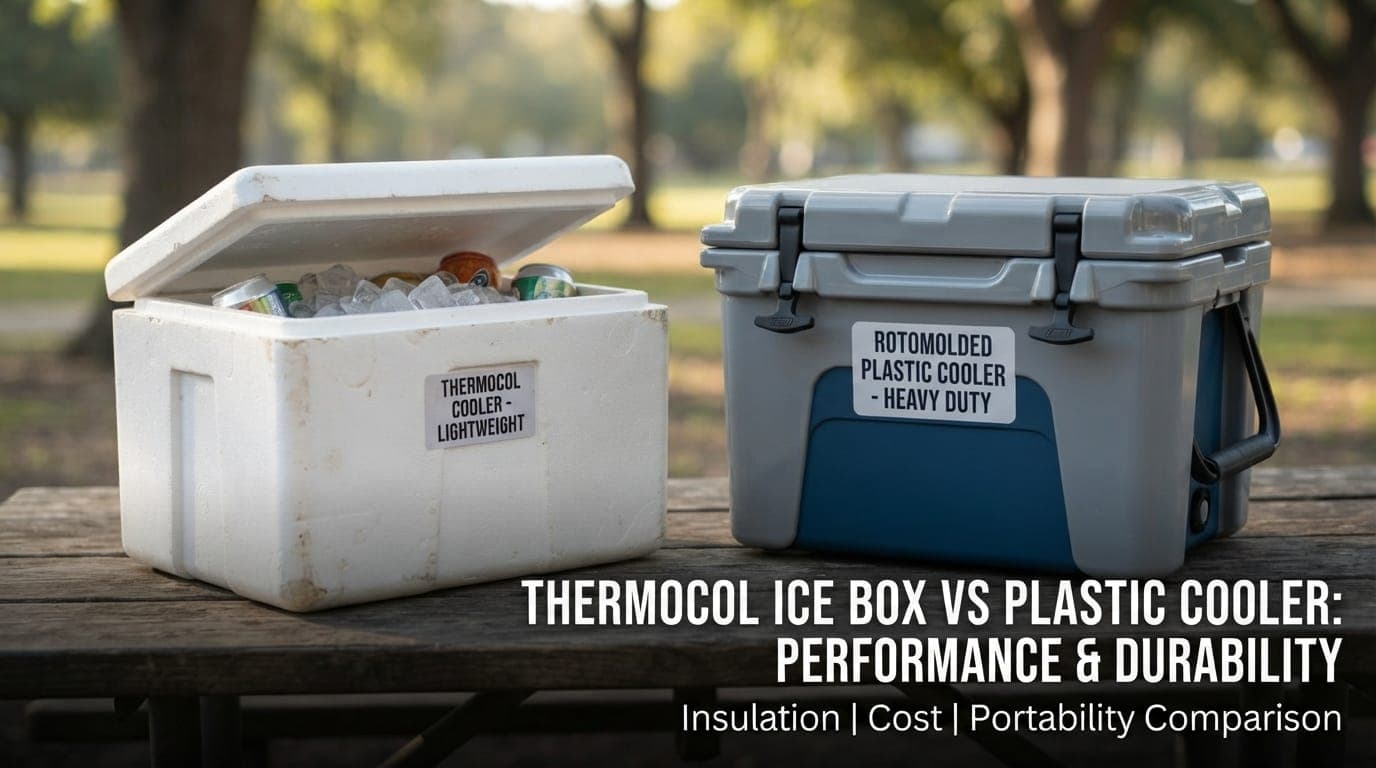
- Ice Box vs Hard Plastic Cooler
- How to Pack a Thermocol Box for Vaccine/Medicine Transport
Frequently Asked Questions
Q1: Where can I find a thermocol box supplier for my seafood business in Karachi? interiorsolutions.pk delivers thermocol and fish boxes to Karachi with nationwide sourcing capacity, alongside local Karachi-based suppliers near West Wharf and Korangi Fisheries Harbour. Consider both options, nationwide suppliers often offer more consistent availability during peak demand and more competitive bulk pricing, while local suppliers offer proximity advantages for urgent, same-day needs. (Ahrefs SV: 30/mo, "thermocol box karachi")
Q2: What makes a fish box different from a standard thermocol box? Fish boxes are specifically reinforced for wet, cold, ice-packed conditions that are genuinely harder on packaging than dry goods transport. This reinforced construction handles moisture, ice contact, and repeated handling better than a standard general-purpose thermocol box designed for drier applications.
Q3: Should Karachi seafood businesses buy disposable or reusable thermocol boxes? This depends on shipping frequency. Occasional or lower-volume shippers generally do fine with standard disposable-grade boxes. Businesses shipping frequently at commercial volume, daily or near-daily, as is common in Karachi's harbour-based seafood trade, often find Hi-D (high-density) reusable boxes pay back their higher upfront cost quickly through repeated use.
Q4: Is it better to buy thermocol boxes from a local Karachi supplier or a nationwide one? Both have genuine advantages, local suppliers offer proximity and potentially faster turnaround for urgent needs, while nationwide suppliers often provide more consistent availability during local demand spikes and more competitive bulk pricing due to broader purchasing scale. Many Karachi seafood businesses use nationwide suppliers as their primary source with local options as backup for urgent gaps.
Q5: How far in advance should I order thermocol boxes for seafood shipping? Ordering ahead of Karachi's predictable peak fishing seasons is genuinely worthwhile, avoiding both the scramble and potential price premium of last-minute sourcing during high-demand periods. Establishing a regular supply relationship with confirmed delivery timelines is more reliable than reactive, as-needed ordering for a business with predictable recurring volume.
Q6: Do thermocol box suppliers offer bulk pricing for seafood businesses? Most suppliers offer meaningfully better per-unit pricing at bulk order quantities, which is worth negotiating specifically given the genuine recurring volume most seafood businesses move. Standard retail-tier pricing is rarely the best available rate for a predictable, ongoing commercial purchase relationship.
Q7: What is Karachi's seafood industry scale, and why does it matter for packaging demand? Karachi's fish harbour ecosystem, centered around West Wharf and Korangi Fisheries Harbour, handles substantial volume from local market fish to export-grade seafood, with continued infrastructure expansion planned to grow export capacity to Gulf and regional markets. This scale drives consistent, genuine demand for reliable thermocol packaging across every stage of the supply chain, from harbour to final market or export point.
Have questions about this?
Chat with us on WhatsApp. We usually reply within minutes.